Why Your Power Numbers Drop When the Studio Gets Hot
Quick Answer: In heat, your body sends more blood to the skin to shed heat, which leaves less for working muscles. Heart rate rises for the same power, plasma volume falls as you sweat, and sustainable output drops measurably. It is a well documented physiological response, not a fitness regression. The correct move is to pace on effort rather than defending a number.
A hot room is a harder workout at a lower number. Both parts of that are true.
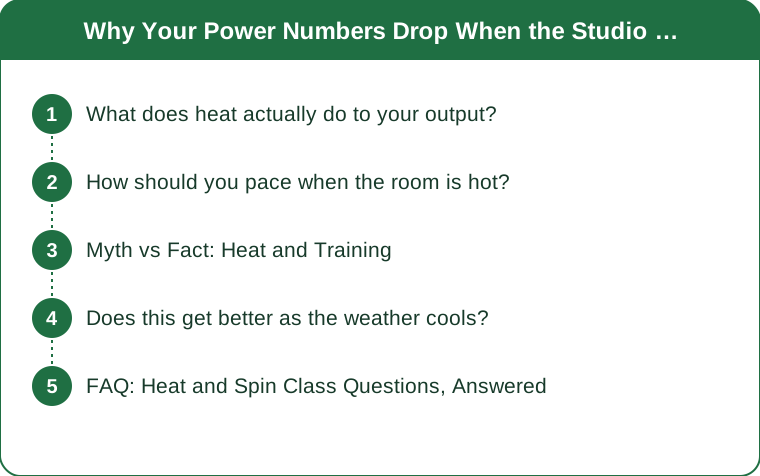
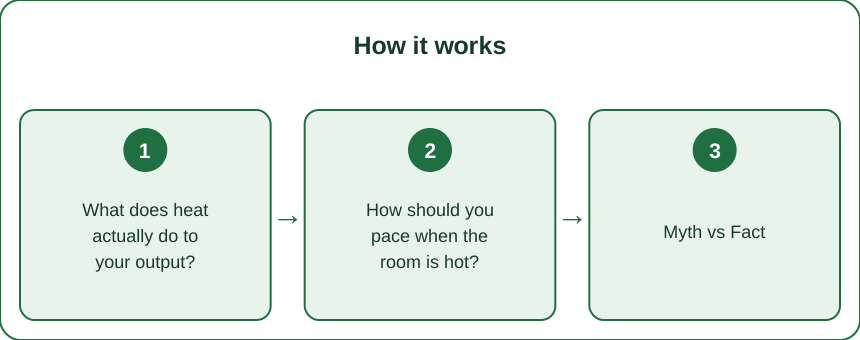
What does heat actually do to your output?
It creates direct competition for blood flow, and the muscles lose.
When core temperature rises, the body increases blood flow to the skin so heat can be lost to the air. That blood is diverted from somewhere, and a significant part of it comes from what would otherwise supply working muscle.
The knock on effects compound:
Heart rate rises for the same workload. With less blood returning to the heart per beat, the heart beats more often to maintain output. A heart rate that reads ten to fifteen beats higher at identical power is the classic signature, and it is the first thing riders notice.
Plasma volume falls as you sweat. Losing fluid reduces blood volume, which reduces stroke volume, which pushes heart rate higher still. This is why the effect gets worse over a class rather than being constant — twenty minutes in is meaningfully harder than five.
Perceived effort rises independently. Heat makes a given workload feel harder for reasons that are partly central rather than muscular, and this contributes to riders backing off before they are physiologically obliged to.
Cardiac drift is the standard term for heart rate climbing over time at constant power, and it is much more pronounced in heat.
The research on this is well established: sustained power output falls in hot conditions, and the drop can be substantial for prolonged efforts. Well trained cyclists show it too. It is not a marker of poor conditioning.
One useful implication: your heart rate in a hot room does not mean what it means in a cool one, so training zones based on heart rate need interpreting rather than obeying.
How should you pace when the room is hot?
By effort and by breathing, treating the power number as information rather than a target.
Ride to perceived exertion. In hot conditions, the same effort produces a lower number, and chasing the number produces an effort you cannot hold. A rider who defends their usual watts in a hot room typically falls apart in the last third of the class, which costs far more than the earlier watts gained.
Use the talk test as a check. If you cannot speak a short sentence during an endurance interval, you are above the intended zone regardless of what the display says.
Expect the drop and plan for it. A five to ten percent reduction in sustainable output in a hot room is unremarkable. Deciding that in advance stops it feeling like failure at minute twenty five.
Start conservatively. Heat accumulates, so the cost of going out hard is much higher than in a cool room. The first ten minutes feel deceptively fine because core temperature has not risen yet.
Practical measures that genuinely help:
Get in front of a fan. Air movement is the biggest single variable in how much heat you can shed, and studios vary enormously in airflow. Bike position relative to the fans matters more than most riders realise — it can be worth arriving early for.
Hydrate before, not just during. Arriving already down on fluid makes everything worse, and drinking during a class only partly keeps up with sweat losses.
Consider what you wear. Anything that traps heat against the skin reduces evaporative cooling, which is the main way you lose heat. A wet, non wicking top is a worse insulator than nothing.
Ice or a cold towel on the neck between intervals genuinely helps perceived effort, which matters more than it sounds like it should.

Myth vs Fact: Heat and Training
Myth: sweating more means a better workout. Fact: sweat rate reflects thermal load and individual physiology, not work performed. You can sweat heavily in a hot room while producing less mechanical work than in a cool one.
Myth: training in heat makes you fitter faster. Fact: heat acclimation is a real adaptation with real benefits, including increased plasma volume and earlier sweating. It takes structured exposure over about one to two weeks, and it is a specific adaptation to heat rather than a general fitness accelerant.
Myth: a higher heart rate means you worked harder. Fact: heart rate is elevated by heat at identical workloads. In a hot room, high heart rate at low power is thermal, not effort, and treating it as intensity leads to overreaching.
Myth: you can drink enough to offset it. Fact: sweat rates during hard indoor cycling frequently exceed what the stomach can absorb, so some fluid deficit during a hard class is normal. Pre hydration matters more than trying to catch up.
Myth: the drop means you have lost fitness. Fact: this is the most demoralising misreading and the least accurate. Compare like with like — same studio conditions, same time of day — before drawing any conclusion about fitness.
Does this get better as the weather cools?
Yes, and the next few weeks are likely to produce some of your best numbers of the year, for reasons worth understanding.
Cooler ambient temperatures mean less blood diverted to the skin and better heat dissipation, so sustainable power rises. Endurance athletes routinely perform better in cool conditions than in hot, and the difference is not small.
A few things to expect and plan for:
Numbers will jump without any change in fitness. Genuinely encouraging, and worth being clear eyed about, since the reverse will happen next summer.
Studios take a while to adjust their heating. Early autumn is when rooms are often the most inconsistent — cool at the start of a class, then overheated once the heating is on and forty people are working. The variability is higher now than at any other time of year.
Warm ups matter more. A cold room means cold muscles, and the first hard interval on cold legs is where strains happen. Add five minutes and start easier than you did in July.
Dress in layers you can remove. Arriving cold and starting in a jacket you shed after ten minutes is better than being cold for the first quarter of the class.
Heat acclimation fades within a couple of weeks. If you spent the summer training in heat, that adaptation goes away, which is normal and worth knowing if you plan any warm weather training or racing later.
Watch hydration even as it gets cooler. Thirst drops in cool weather while sweat losses during hard indoor efforts remain high, so under drinking is a genuinely common autumn issue.
This is general training information. If you experience dizziness, nausea, confusion, chest pain, or stop sweating during exercise in heat, stop immediately and seek medical help — those are signs of heat illness, which is serious and not something to ride through.
FAQ: Heat and Spin Class Questions, Answered
How much power should I expect to lose in a hot room?
Commonly around five to ten percent for sustained efforts, and more if the room is very hot or badly ventilated, or if you started dehydrated. The drop increases the longer the effort goes on.
Why is my heart rate so high when the power is low?
Because blood is being diverted to the skin for cooling and plasma volume falls as you sweat, so the heart beats more often to maintain output. It is a thermal response, not a measure of how hard you are working.
Should I still push for my usual numbers?
No. Pace on perceived effort. Defending a number in heat usually means falling apart in the last third of the class, which costs more overall than accepting a lower figure.
Is hot training useful at all?
Heat acclimation is a genuine adaptation with real benefits, but it requires structured, progressive exposure and it should not come from accidentally overheating in a badly ventilated studio. Comfort and airflow are worth prioritising for ordinary training.
TL;DR:
- Heat diverts blood to the skin and reduces plasma volume, so sustainable power drops and heart rate rises at the same effort.
- The effect worsens through a class, which is why minute twenty five is much harder than minute five.
- Pace on perceived effort and breathing, get in front of a fan, and pre hydrate rather than trying to catch up.
- Expect numbers to rise as rooms cool over autumn, and expect early autumn studios to be the most inconsistent of the year.
Next hot class, pick a bike near a fan and ride the effort rather than the number.
Keep Reading
This article is for general informational and styling purposes only. Fit, sizing, and product availability may vary.