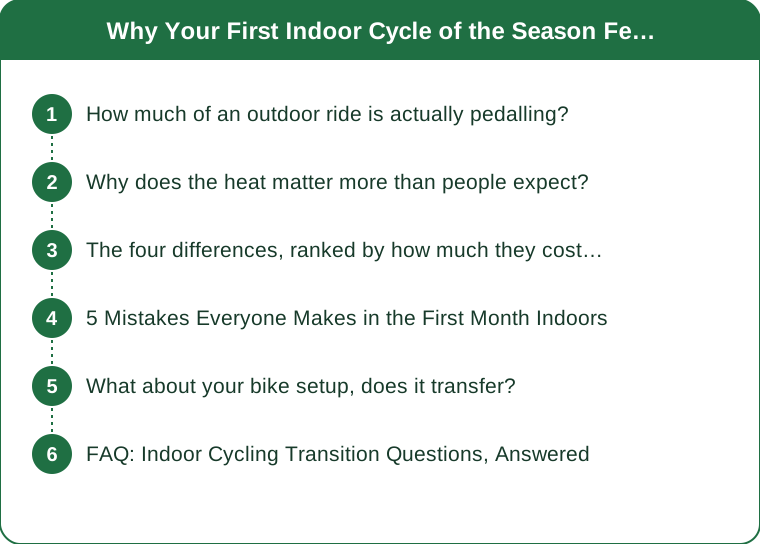
Why Your First Indoor Cycle of the Season Feels Harder Than Your Last Outdoor Ride
Quick Answer: Indoor riding removes coasting, removes airflow, and removes the terrain variety that lets you recover on the move. A studio hour is usually 55 to 60 minutes of continuous pedalling at higher core temperature, where an outdoor hour might be 40 minutes of actual work. The fitness transfers; the demand profile does not.
Every September the same thing happens to people who spent the summer outside. The legs are strong, the lungs are fine, and twenty minutes into the first indoor class the whole thing feels disproportionately hard. It isn’t detraining. It’s a genuinely different task.
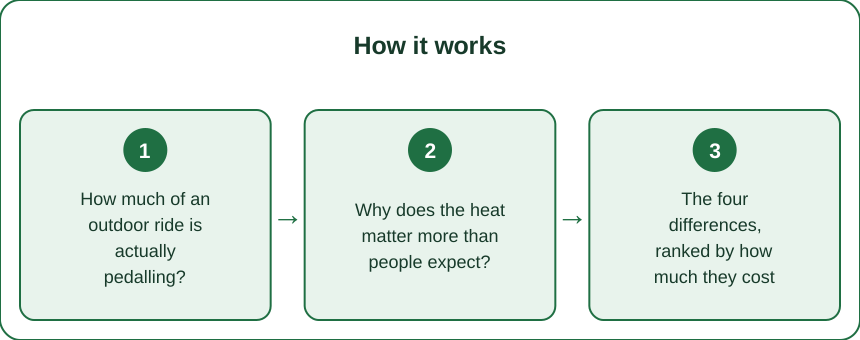
How much of an outdoor ride is actually pedalling?
Less than most riders assume, and the gap is the whole story.
On typical mixed terrain, coasting, descending, and soft-pedalling account for somewhere between 15 and 35 percent of ride time. Junctions, traffic lights, and the natural pauses of riding outside add more. A two-hour outdoor ride can contain ninety minutes of meaningful work.
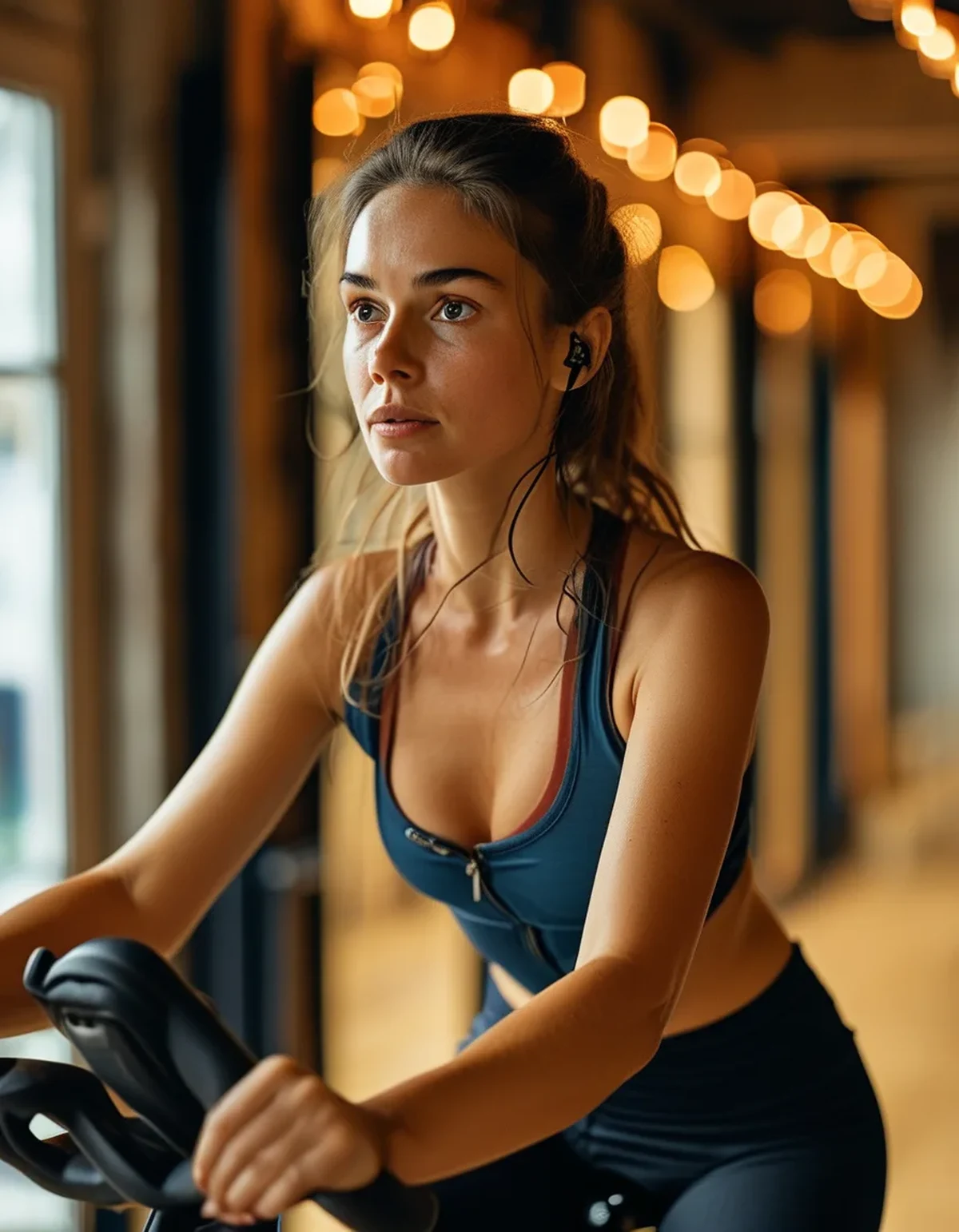
An indoor class is close to 100 percent pedalling. The flywheel keeps turning, the instructor keeps counting, and there is nowhere on the profile where your legs stop.
That difference alone explains a lot. Forty-five continuous minutes is a harder ask than sixty minutes containing fifteen minutes of free-wheeling, even at the same average power. Continuous work accumulates fatigue differently because the short recoveries that outdoor riding hands you for free are what keep lactate clearance ahead of production.
Why does the heat matter more than people expect?
Because riding a bike generates a lot of heat and moving through air is how you get rid of it.
Outdoors at 20 kilometres an hour you have constant convective cooling across your whole body. Indoors, still air, twenty other riders, and a room that started at a comfortable temperature will have you at a meaningfully higher core temperature within fifteen minutes.
Higher core temperature raises heart rate at the same power output, an effect called cardiac drift, and it can add 10 to 20 beats per minute over a session. Your legs are producing the same watts and your heart is working considerably harder to do it.
It also raises perceived exertion independently of heart rate. The same effort simply feels worse when you’re hot. This is the largest single reason the first indoor session of autumn feels so disproportionate, and it’s also the one that improves fastest with re-acclimation, usually within four to six sessions.
The four differences, ranked by how much they cost you
1. No coasting. The biggest one. Continuous pedalling is a different physiological demand than intermittent pedalling at the same average output.
2. No airflow. Cardiac drift, higher perceived effort, faster fluid loss. Position yourself near a fan and it changes the session more than any other single choice you make in the room.
3. No terrain feedback. Outdoors, gradient tells your legs what’s coming. Indoors, the effort profile is decided by someone else and often changes with no notice, which makes pacing much harder and leads to going too hard in the first fifteen minutes.
4. Different position and different muscle emphasis. Studio bikes typically place you slightly more upright with less reach, and standing efforts out of the saddle load quadriceps and glutes differently than seated outdoor climbing does. It’s not worse, it’s unfamiliar, and unfamiliar work produces more soreness and more perceived effort.
Stacked together, these make a 45-minute class comparable to a considerably longer outdoor ride, which is exactly what your legs are telling you.
5 Mistakes Everyone Makes in the First Month Indoors
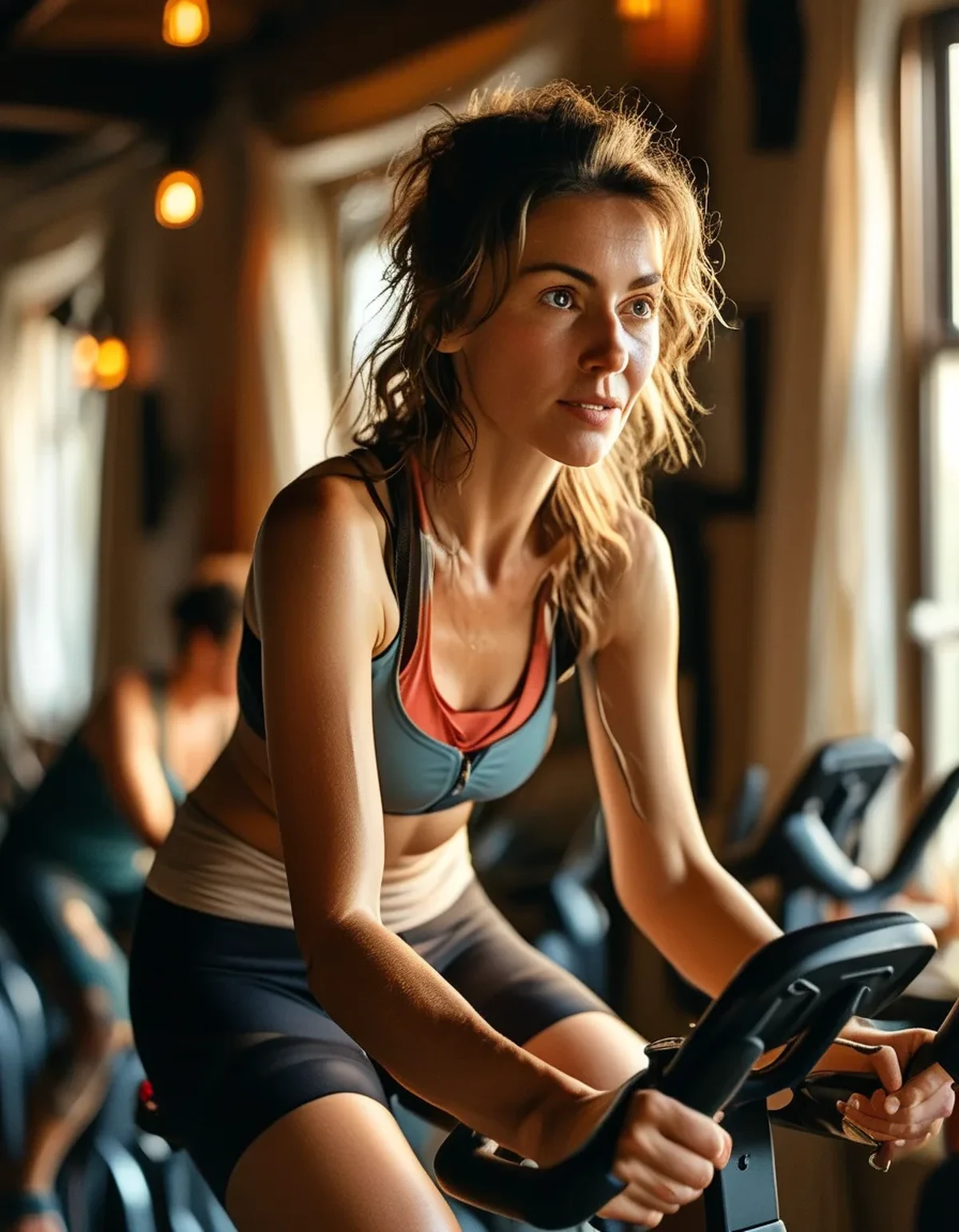
1. Matching your outdoor duration. If you rode 90 minutes outside, starting with 90 minutes indoors is a big overshoot. Start at 45 and build.
2. Ignoring the fan. Standing at the back of a still room is a self-inflicted handicap. Get near airflow, and bring a towel, because sweat that stays on your skin isn’t cooling you.
3. Under-drinking. Sweat rates indoors commonly run 1 to 1.5 litres an hour, well above outdoor rates in the same season, and there’s no bottle stop. One bottle for a 45-minute class is a minimum, not a plan.
4. Going out too hard because the first ten minutes feel easy. They feel easy because you haven’t heated up yet. The session tells the truth at minute twenty.
5. Assuming a bad first class means lost fitness. It almost never does. Three sessions in, the same class feels dramatically more manageable, which is the acclimation, not a fitness change.
What about your bike setup, does it transfer?
Partly, and the parts that don’t transfer cause most of the early-season knee and neck complaints.
Saddle height is the one measurement worth carrying over precisely. Measure from the centre of the bottom bracket to the top of the saddle on your own bike and reproduce it on the studio bike. Most studio bikes have numbered posts, so once you’ve done it, it’s a number you can remember.
Saddle fore-aft matters nearly as much and is almost never adjusted by newcomers. Too far forward loads the knees; too far back overstretches at the bottom of the stroke.
Handlebar height is where studio bikes differ most from road bikes, sitting considerably higher. Slamming them down to replicate a road position usually causes more problems than it solves, since the bike’s geometry isn’t the same underneath you.
Give yourself three sessions of small adjustments rather than trying to nail it on day one. And if something hurts sharply rather than aching, stop and adjust rather than finishing the class. This is general information, not medical advice.
FAQ: Indoor Cycling Transition Questions, Answered
How long until indoor riding stops feeling harder?
Most riders report it evening out within four to six sessions, driven largely by heat re-acclimation rather than fitness change.
Should I use the same resistance as my outdoor gearing?
There’s no reliable conversion between studio resistance and outdoor gearing. Ride to perceived effort and cadence for the first few weeks rather than trying to translate numbers.
Is indoor cycling worse training than outdoor?
No, and for structured intervals it’s usually better, because there are no junctions, descents, or traffic to interrupt the effort. It’s less specific for handling and pacing skills, which matter if you’re racing outdoors.
TL;DR:
- Indoor riding is continuous work; outdoor riding contains 15 to 35 percent free recovery you never counted.
- Still air raises core temperature, which adds 10 to 20 beats per minute and makes the same power feel much harder.
- Start at 45 minutes, sit near a fan, and drink more than feels necessary.
- Copy your saddle height across, adjust fore-aft, and give the position three sessions rather than one.
The first class of the season isn’t a fitness test, it’s an acclimation test. Give it two weeks and the numbers come back on their own.
Keep Reading
This article is for general informational and styling purposes only. Fit, sizing, and product availability may vary.