Why Outdoor Cycling Fitness Does Not Transfer to the Spin Studio
Quick Answer: Outdoor riding has constant micro-recovery built into it — freewheeling, corners, traffic, terrain. A spin class removes all of it, so a rider with excellent outdoor fitness meets a continuous load they have never trained for. Add heat, a fixed position and a different cadence range, and week one indoors is genuinely hard for well-trained cyclists.
You rode all summer. Three, four times a week, real distances. Then the evenings got dark, you booked an indoor class to keep it going, and 25 minutes in you were in more trouble than anyone who rode 40 miles on Saturday should be.
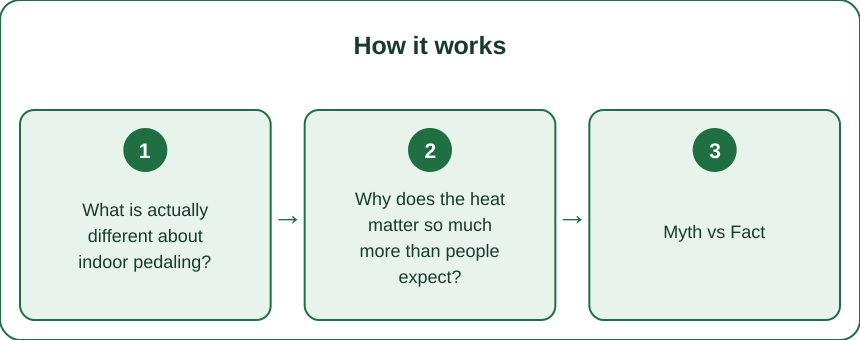
What is actually different about indoor pedaling?
The absence of gaps, more than anything else.
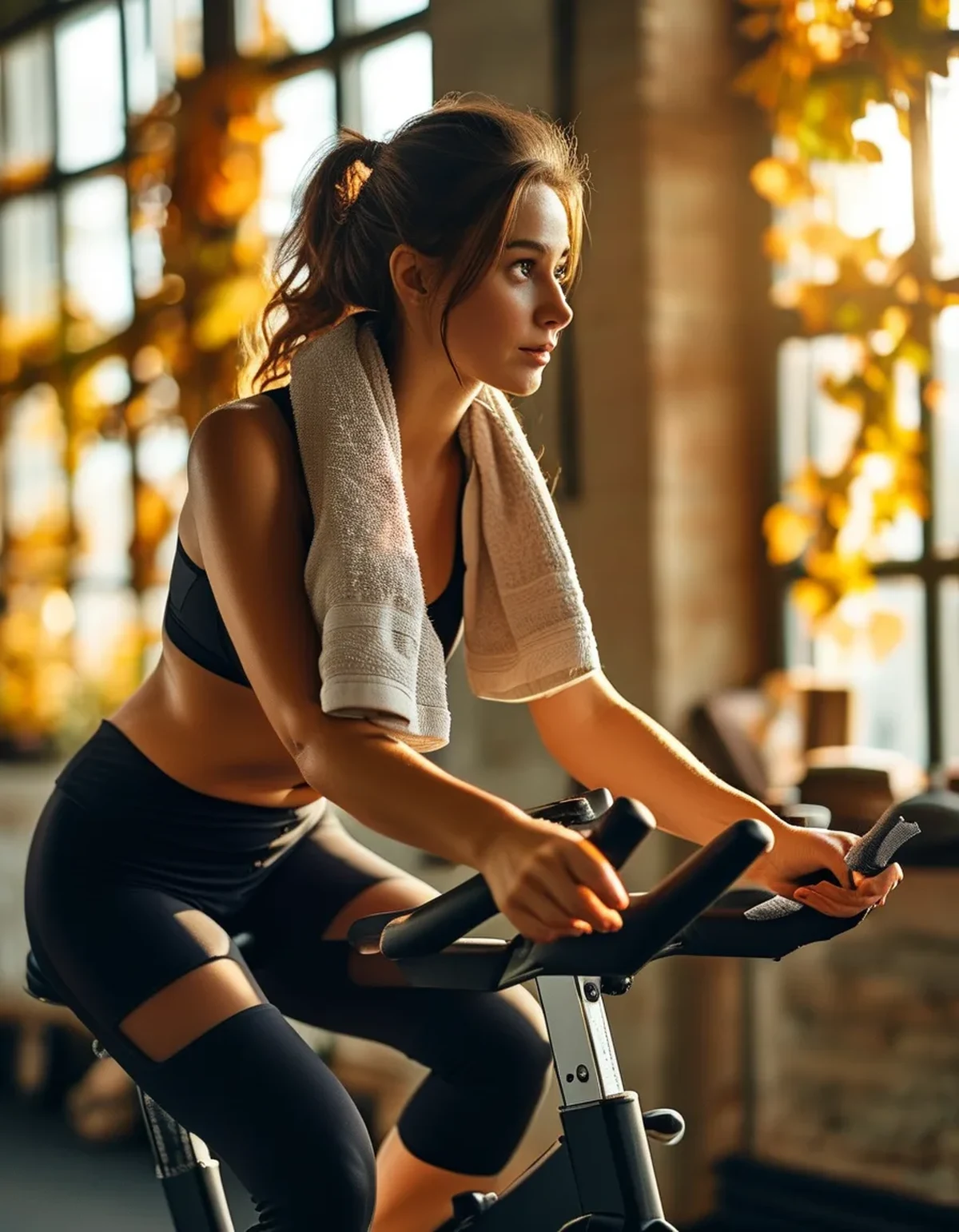
Outdoor riding is intermittent by nature. You freewheel down descents. You soft-pedal into corners. You stop at junctions, you ease off in traffic, you sit up for a drink. Even a hard outdoor ride contains hundreds of brief recoveries, and they’re so normal you don’t perceive them as rest.
A spin class has none. From the moment the class starts, the flywheel demands input continuously — there is no coasting on a fixed or heavily-weighted flywheel, and no terrain to hand you a break. A 45-minute class can contain more actual pedaling time than a 90-minute outdoor ride.
This is why the fatigue feels unfamiliar rather than just severe. Your aerobic fitness is genuinely there; what’s missing is tolerance for uninterrupted load.
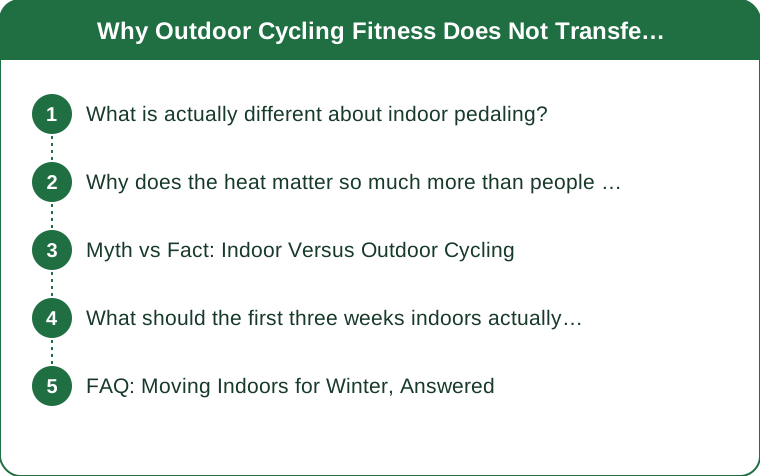
Position is fixed too. Outdoors you shift constantly — hoods, drops, out of the saddle, weight forward on a climb. Each shift redistributes load between muscle groups and gives some of them a rest. Indoors, especially in a class following a set structure, you hold far fewer positions for far longer, and specific muscles accumulate fatigue that outdoor riding spreads around.
Why does the heat matter so much more than people expect?
Because outdoor riding comes with a free 15-mile-per-hour fan and a studio does not.
Moving through air at riding speed removes heat extremely efficiently. Take that away, put 25 people in a room, and core temperature rises fast. Elevated core temperature raises heart rate independently of effort — commonly by 10 to 20 beats per minute for the same power — which means the effort that felt like zone 2 outdoors reads as zone 3 or 4 indoors.
The practical result: riders judging effort by heart rate conclude they’re working much harder than they are, and riders judging by feel find that everything is harder at the same numbers. Both are experiencing the same thermal problem.
Sweat rate goes up correspondingly, and indoor sweat doesn’t evaporate as effectively, so the cooling you do get is less efficient than it looks. Fluid loss in a hot studio class routinely exceeds an outdoor ride of twice the duration.
What helps: get a spot near a fan or a door and treat that as a real factor rather than a preference. Bring more water than you think — at least 750ml for a 45-minute class, more if the room runs warm. And accept for the first few weeks that your heart rate numbers indoors are not comparable to your outdoor ones. Comparing them is how people conclude they’ve lost fitness in a fortnight.
Myth vs Fact: Indoor Versus Outdoor Cycling
Myth: If you can ride 40 miles you’ll find a spin class easy.
Fact: Different demand. Continuous load, fixed position and heat make the class a distinct stressor. Outdoor fitness helps considerably — you’ll adapt in two or three weeks rather than starting from nothing — but week one being hard is normal, not a sign that your summer didn’t count.
Myth: Spin classes are just easier, lower-quality training.
Fact: Time-per-unit-of-training-stress, indoor riding is more efficient than outdoor precisely because it removes the recoveries. That’s the same feature that makes it hard.
Myth: You should match your outdoor cadence indoors.
Fact: Class formats often run higher cadences than road riding — sometimes considerably. If you habitually ride at 80rpm and the class runs 100 to 110, that’s a neuromuscular demand you haven’t trained, and it fatigues differently. Neither cadence is wrong; the mismatch is what catches you out.
Myth: The resistance knob is the only variable that matters.
Fact: Bike setup matters more. Saddle height, fore-aft and handlebar reach set on a studio bike in 30 seconds by someone else is a common source of knee and hip complaints in riders who have no such problems on their own properly fitted bike.
What should the first three weeks indoors actually look like?
Treat it as a new discipline, which it is.
Week 1 — one class, and ride it below the room. Deliberately take the recoveries the class doesn’t offer: sit up, drop resistance, soft-pedal through a track. Nobody notices and it’s the difference between adapting and being wrecked for three days.
Week 2 — two classes, one ridden fully. Start comparing your own numbers week to week rather than against your outdoor data.
Week 3 — normal. By now the continuous-load tolerance is largely built and the heat adaptation is well underway; heat acclimation happens faster than most training adaptations, typically within one to two weeks of regular exposure.
Three things to do from day one:
Set the bike properly. Saddle height so your knee has a slight bend at the bottom of the stroke, saddle fore-aft so your forward knee sits over the pedal axle, bars at a height you can hold without locking your elbows. Arrive five minutes early and do it yourself.
Bring your own shoes if you have them. Clipping in changes the pedal stroke and it’s what your legs already know.
Put a towel over the bars and one on the frame. Sweat corrodes studio bikes and it’s also how the bars get slippery halfway through.
FAQ: Moving Indoors for Winter, Answered
Will indoor riding maintain my outdoor fitness over winter?
Yes, and often improves it — continuous load is good training stimulus. What it doesn’t maintain is bike handling, position variety and the specific durability of long rides. If spring events matter, keep one longer ride where you can.
Why do my knees hurt indoors and never outdoors?
Almost always setup. A studio bike set slightly low, ridden at high cadence with no position changes for 45 minutes, is a very different load from your own bike. Fix the saddle height first — it resolves the majority of cases.
Should I use the class’s power numbers or my own?
Studio bike power figures are frequently uncalibrated and vary between bikes in the same room. Use them for relative effort within a single session on a single bike, not for comparison to your outdoor power. Chasing absolute numbers across different studio bikes tells you nothing useful.
How long before it stops feeling this hard?
Most outdoor-trained riders report it feeling normal by the third or fourth class. The heat adaptation is the fastest part; the continuous-load tolerance takes slightly longer.
TL;DR:
- Outdoor riding is full of micro-recoveries; a spin class removes all of them.
- Heat raises heart rate 10-20bpm independently of effort — indoor and outdoor numbers aren’t comparable.
- Fixed position means specific muscles fatigue that outdoor riding spreads the load across.
- Ride week one deliberately below the room, and take your own recoveries.
- Set the bike yourself: saddle height, fore-aft, bar reach. Most indoor knee pain is a setup issue.
Your summer absolutely counted. It just trained a version of cycling that includes rest, and the studio version doesn’t — which takes about three weeks to sort itself out.
Keep Reading
This article is for general informational and styling purposes only. Fit, sizing, and product availability may vary.