Why Your Legs Feel Heavy for Days After Your First Spin Class Back
Quick Answer: Delayed onset muscle soreness comes mainly from unfamiliar loading, not from working hard. After time off, your legs have lost their adaptation to sustained high-cadence resistance, so a normal class is now an unfamiliar stimulus - and the soreness peaks at 24 to 48 hours. It is not lactic acid and it is not a sign of damage you need to fix. Go back within three days at half the resistance, and the second class hurts far less than the first.
The soreness is a one-off tax on returning.
You pay it once - and only if you go back soon enough for it to count.

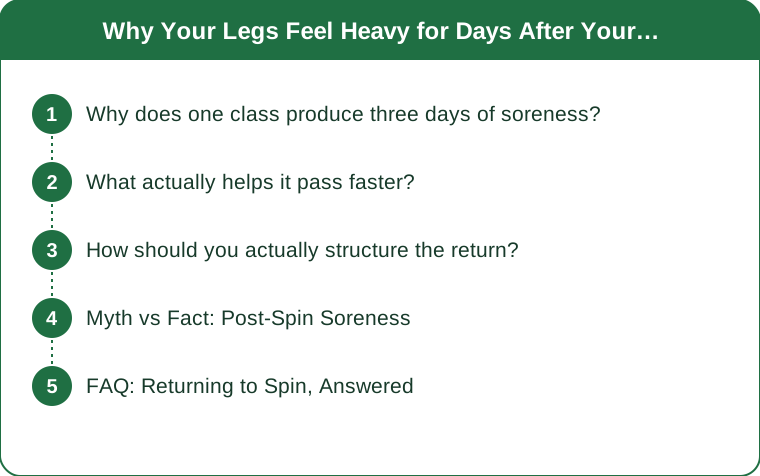
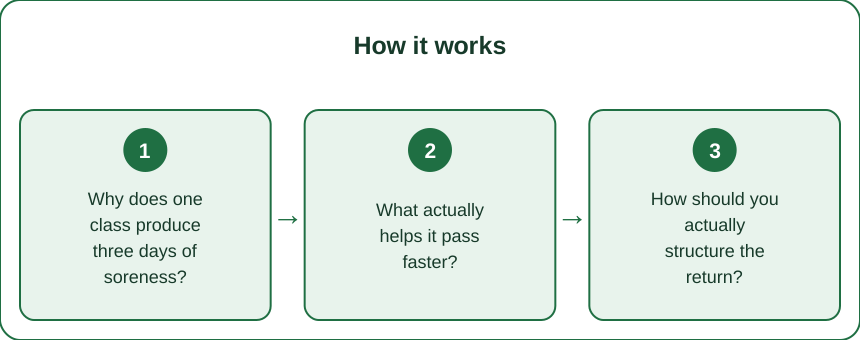
Why does one class produce three days of soreness?
Because the stimulus is unfamiliar, and unfamiliar is what drives soreness far more than hard.
Delayed onset muscle soreness follows unaccustomed loading. Muscle fibres experience microscopic disruption when asked to do something they are not currently adapted to, and the resulting inflammatory response is what you feel a day or two later. Familiar work at the same intensity produces far less of it.
A break removes the adaptation quickly. Even a few weeks off reduces the specific tolerance your legs had built for sustained cycling, and a month or more removes a large part of it. Your general fitness stays much longer than the specific adaptation does.
Spin is a lot of repetitions. At a typical cadence, a forty-five minute class means thousands of pedal strokes - an enormous volume of repeated contractions that your legs have not done recently.
Heavy resistance and standing climbs add eccentric loading, and eccentric work produces the most soreness of any contraction type. A class heavy on standing climbs will hurt more than the same effort seated.
And it peaks late by design. The inflammatory process builds over hours. Feeling fine on the evening of the class and destroyed the following morning is completely normal and often catches returners by surprise.
Crucially, it is not lactic acid. Lactate clears within about an hour of exercise and has nothing to do with soreness two days later. That explanation has been out of date for decades and it leads people to the wrong remedies.
What actually helps it pass faster?
Movement, mostly. The interventions people reach for are less effective than the one they avoid.
Gentle movement is the most reliable relief. Walking, easy cycling, light mobility work. Blood flow to the area speeds the process and temporarily reduces the discomfort - and it is the intervention with the best evidence behind it.
Do not fully rest for three days. Complete immobility makes the stiffness worse and delays the return. The instinct to protect sore legs is the thing that extends the misery.
Protein and sleep support the repair. Nothing exotic - adequate protein through the day and a normal night’s sleep matter more than any supplement.
Heat helps comfort; cold helps acute swelling. Both are about symptom relief rather than speeding recovery, so use whichever feels better.
Stretching does not prevent or cure it, though it can feel pleasant. Static stretching before exercise is actually counterproductive for performance and does nothing for soreness afterwards.
And time is the main ingredient. Soreness from a genuine first-session-back typically peaks at 24 to 48 hours and resolves within three to five days. If it lasts beyond a week, or if you have severe swelling, very dark urine, or pain far out of proportion, seek medical advice - rarely, extreme unaccustomed exercise causes a serious condition that needs treatment. This is general information, not medical advice.

How should you actually structure the return?
Two easy sessions before one hard one, and a shorter gap than feels natural.
Halve the resistance in your first class back, and stay seated. Keep the cadence and the enjoyment, lose the load. Resistance is what drives the soreness; cadence largely does not.
Leave early if you need to. Thirty minutes of a forty-five minute class is a complete first session back. Nobody notices and it changes your week entirely.
Go back within three days. The repeated bout effect is real and strong - a second exposure within a few days produces dramatically less soreness, and the protection lasts for weeks. Waiting a fortnight means starting over.
Build resistance before you build duration. Two or three sessions at moderate load, then extend the class length, then add the standing climbs.
Set up the bike properly before the first class. Saddle height, fore-aft, and handlebar position all change the loading, and a returner on a badly set-up bike gets sore in the wrong places. Ask an instructor - they would far rather do it before class than treat a knee complaint after.
And expect the fitness to come back faster than it left. Muscle memory is real; previously trained people regain conditioning substantially faster than they built it the first time. Three weeks of consistency usually gets most of it back.
Myth vs Fact: Post-Spin Soreness
Myth: Soreness is lactic acid built up in the muscle. Fact: lactate clears within about an hour. Soreness peaking at 24 to 48 hours is an inflammatory response to unaccustomed loading, which is a completely different mechanism.
Myth: No soreness means the workout was too easy. Fact: soreness measures unfamiliarity, not effectiveness. Well-adapted athletes train hard with little soreness. Chasing soreness is chasing the wrong variable.
Myth: Stretching afterwards prevents it. Fact: stretching has consistently failed to show a meaningful preventive effect. It feels good, which is a reason to do it, but not the one usually given.
Myth: You should rest completely until it passes. Fact: light movement relieves it faster than rest. Total rest prolongs the stiffness.
Myth: Being sore means you should skip the next class. Fact: an easy session while mildly sore is safe and reduces future soreness. Only significant pain, swelling, or reduced range of motion justifies a full skip.
Myth: Older returners just have to accept more soreness. Fact: the biggest predictor is time away and the size of the jump, not age. A graduated return works at any age, and skipping the graduation is what actually causes the three-day limp.
FAQ: Returning to Spin, Answered
How long before I lose my cycling fitness?
Noticeable losses in specific cycling conditioning begin within a couple of weeks, with more substantial changes over a month or more. General aerobic fitness holds up better than the specific muscular adaptation, which is exactly why your lungs feel fine and your legs do not.
Should I take painkillers for the soreness?
For comfort, occasionally, they are fine for most people - but routine anti-inflammatory use around training is not ideal because inflammation is part of the adaptation process. Movement and time work better. Check with a pharmacist if you take them regularly.
Why are my glutes sore and not my quads?
Bike setup. A saddle that is high or far back shifts load toward the glutes and hamstrings, while a low saddle loads the quads and knees. A pattern of soreness that seems wrong is usually the fit, not the class.
TL;DR:
- Soreness comes from unfamiliar loading, not hard work - and it is not lactic acid.
- It peaks at 24 to 48 hours and typically clears within three to five days.
- Gentle movement relieves it faster than rest. Stretching does not prevent it.
- Go back within three days at half the resistance - the repeated bout effect makes session two far easier.
- Build resistance before duration, and get your bike setup checked before the first class back.
Book your second class before you leave the first one. Going back inside three days is the whole trick.
Keep Reading
This article is for general informational and styling purposes only. Fit, sizing, and product availability may vary.