Why Your Legs Burn Out Before Your Lungs Do in Spin Class
Quick Answer: If your legs fatigue before your breathing does, your resistance is likely set too high relative to your cadence — you’re grinding through heavy resistance at low RPM, which fatigues muscles fast without proportionally raising heart rate. Lowering resistance slightly and raising cadence usually rebalances the two.
Your breathing feels totally manageable. Your quads, on the other hand, are done three songs before class ends. That mismatch is common, and it usually points to one dial on the bike, not your overall fitness level.

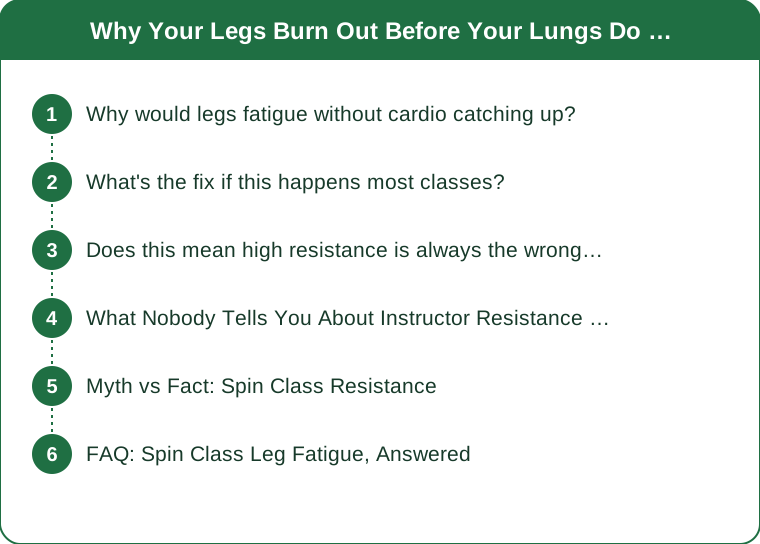
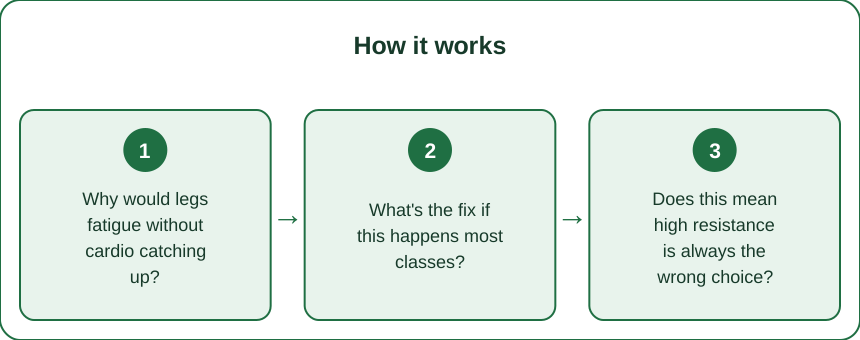
Why would legs fatigue without cardio catching up?
Pedaling against high resistance at a low cadence relies heavily on muscular strength and endurance rather than cardiovascular output — you’re doing something closer to a leg press with your legs than an aerobic effort, which fatigues the muscle fibers directly involved without proportionally raising your heart rate the way a faster, lighter-resistance cadence would.
What’s the fix if this happens most classes?
Try dropping resistance by one or two turns and increasing cadence to compensate — aim for 80-100 RPM during standard flat sections rather than grinding at 60 RPM under heavy resistance. This shifts effort toward your cardiovascular system, which typically has more room to work harder before hitting a limit, compared to specific leg muscles under heavy load.
Does this mean high resistance is always the wrong choice?
No — heavier resistance sections (climbs) are an intentional, valuable part of most spin formats for building strength. The issue is usually about the ratio across an entire class: if nearly every song is heavy resistance and low cadence, your legs are absorbing a disproportionate share of the total workload compared to your cardiovascular system.

What Nobody Tells You About Instructor Resistance Cues
Here’s something rarely explained clearly in class: instructor resistance cues (‘add a quarter turn,’ ‘climb here’) are calibrated for an average participant and don’t account for your individual leg strength versus cardiovascular fitness ratio. If you consistently find your legs failing well before you feel cardiovascularly maxed, you have full permission to under-shoot the instructor’s resistance cue slightly and compensate with faster cadence instead — the workout intent (elevated heart rate) still gets met.
Myth vs Fact: Spin Class Resistance
Myth: Higher resistance always means a better workout. Fact: Excessive resistance at low cadence shifts effort toward muscular fatigue, not cardiovascular gain — a mix serves you better.
Myth: Following the instructor’s exact resistance cue is always correct for you. Fact: Cues are calibrated for an average rider — adjusting slightly for your own leg-vs-cardio balance is appropriate.
Myth: If your legs are the limiting factor, you have low fitness overall. Fact: It usually just reflects a resistance-cadence imbalance, not your general cardiovascular capacity.
FAQ: Spin Class Leg Fatigue, Answered
What cadence should I aim for on flat sections?
Most instructors and studios target 80-100 RPM on flats, reserving lower cadence specifically for intentional heavy-resistance climbs.
Should I tell my instructor my legs fatigue before my cardio does?
It’s not necessary, but many instructors can offer form or resistance guidance if you mention it before or after class.
Does this pattern mean I need more leg strength training outside of spin?
Possibly — if it happens consistently even at adjusted resistance, some dedicated leg strength work outside class can help close that specific gap.
TL;DR:
- Legs fatiguing before cardio usually signals resistance too high relative to cadence, not a fitness problem
- Aim for 80-100 RPM on flat sections, reserving heavy resistance specifically for climbs
- It’s fine to under-shoot an instructor’s resistance cue slightly if it’s calibrated for an average rider, not you
- A consistent pattern might mean added leg strength work outside spin class helps
Next class, try dropping resistance slightly and raising cadence on flat sections — see if that shifts the burn from your legs back toward your breathing where it’s meant to be.
Keep Reading
This article is for general informational and styling purposes only. Fit, sizing, and product availability may vary.