Why Pedaling Cadence Quietly Drifts Downward During a Spin Class Without a Visible Display
Quick Answer: Your pedaling cadence drifts down during a spin class because as fatigue accumulates, your body automatically gravitates toward whatever RPM feels least demanding — and without a visible number, a 10–15 RPM drop feels identical to holding steady. Use the bike’s cadence display, or ride to a playlist with a known BPM, so there’s an external reference you can’t unknowingly drift away from.
You spent the whole class holding what felt like a rock-steady pace. Then someone shows you the data and your cadence fell from 90 to 76 across forty minutes.
You didn’t decide to slow down. You never felt yourself slowing down. That’s the actual problem.
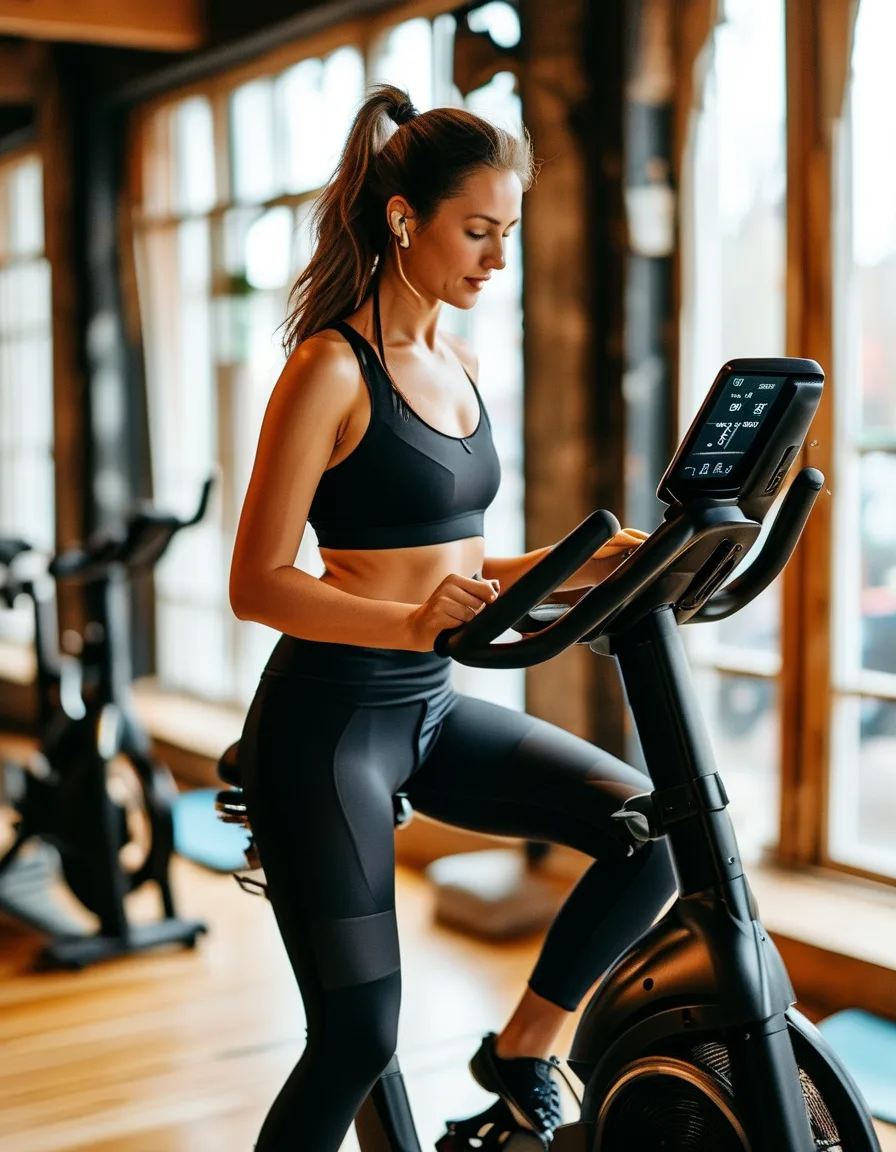
Why Does Cadence Drop During a Spin Class?
Because your body optimizes for efficiency without consulting you.
There’s a well-documented phenomenon in cycling called freely chosen cadence — the RPM a rider naturally settles into when nobody’s telling them what to hold. It’s driven by minimizing perceived effort at a given power output, and it isn’t a conscious choice at all.
As fatigue accumulates, that self-selected cadence shifts. Turning the pedals faster costs more in neuromuscular coordination and cardiovascular demand; grinding a bit slower at the same resistance feels easier moment to moment. So your body drifts toward the slower option, quietly, without ever raising the subject.
It matters because cadence isn’t cosmetic. Power is roughly cadence multiplied by torque. If your RPM drops 15% and your resistance stays where it is, your power output drops with it. You’re doing measurably less work while feeling like you’re doing the same amount — which is a peculiar kind of unfairness.
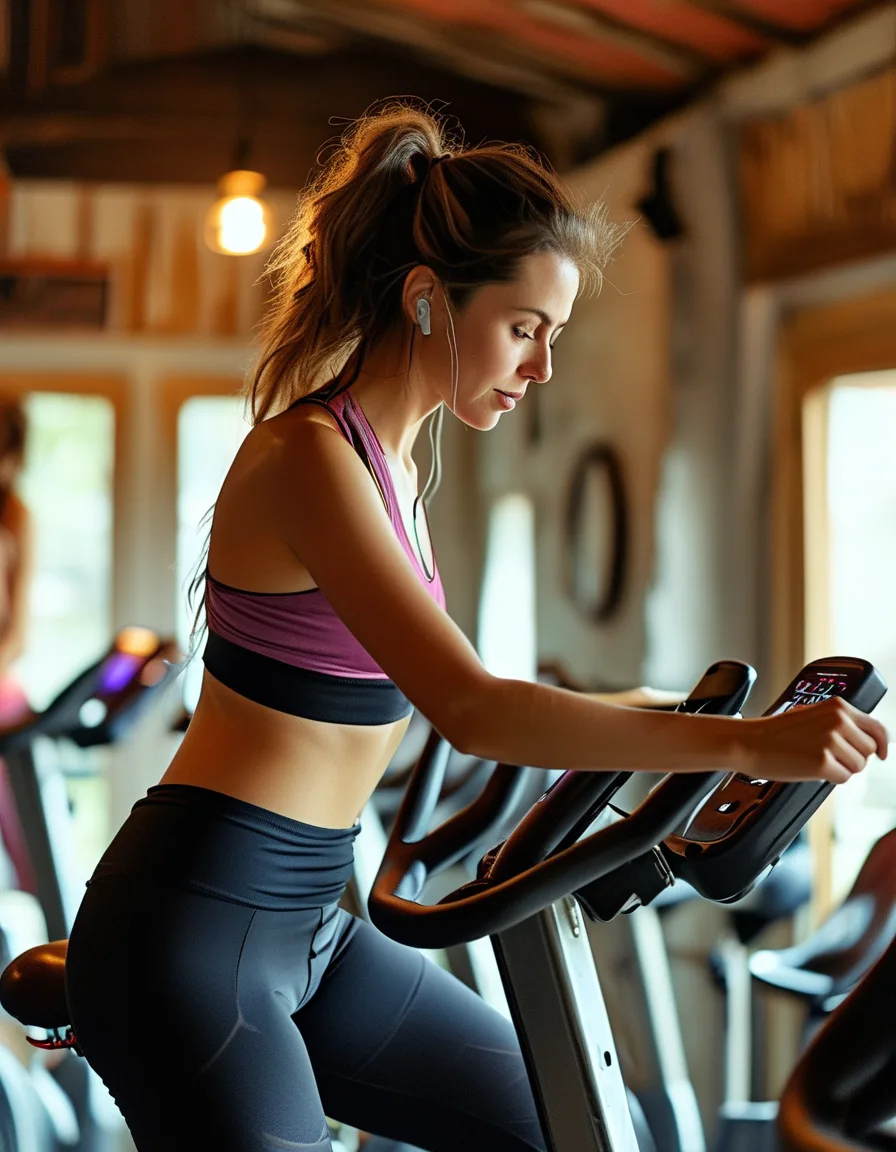
Why Can’t You Feel Yourself Slowing Down?
Because the drift is gradual, and perceived effort stays constant while it happens.
Losing 10–15 RPM over 40 minutes is a change of roughly 0.3 RPM per minute. That is far below what anyone can detect by feel. Each minute is essentially identical to the previous one, and the human sense of pace works by comparison to the recent past.
Worse, your perceived effort doesn’t drop as your output does — it holds steady or rises, because fatigue is accumulating at the same time. So the internal signal you’d use to catch the problem is reporting “same effort,” which is technically true and completely misleading.
This is the same reason runners on a track slow down without noticing, and why swimmers’ split times drift. Any activity where output is judged internally, with no external reference, is subject to it. Cadence just happens to be an unusually easy case to measure.
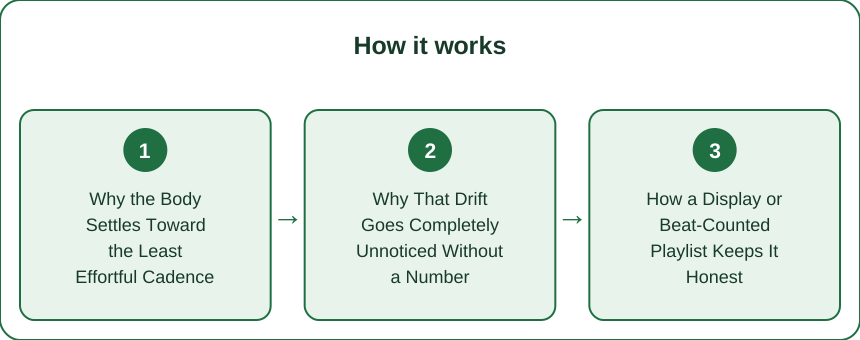
How Do You Maintain Cadence Without a Display?
Give yourself an external anchor your body can’t quietly negotiate with.
1. Use the bike’s cadence display if it has one. Simplest answer. Glance every 2–3 minutes rather than staring — enough to catch drift, not enough to ride the screen instead of the workout.
2. Ride to a playlist with a known BPM. This is the best option on a bike with no display. Music at 130 BPM lets you pedal one stroke per beat at 130 RPM, or one per two beats at 65. Most streaming services have BPM-labeled cycling playlists, and free BPM analyzers will tell you what your own music runs at. The beat is an external clock that doesn’t get tired.
3. Use a metronome app with an earbud if you’re doing structured intervals. Less fun, more precise.
4. Add a cheap cadence sensor. A magnet-and-sensor unit that pairs with your phone runs $25–40 and works on almost any spin bike. Worth it if you ride more than twice a week.
5. Count for 15 seconds, multiply by four. No equipment at all. Count one leg’s revolutions for 15 seconds, ×4 = RPM. Do it every 10 minutes. Crude, free, and enough to catch a 15 RPM drift.
Useful reference ranges: most cycling guidance puts efficient endurance cadence around 80–100 RPM, with 60–70 for heavy seated climbs and 100+ for high-cadence intervals. If you’re drifting into the 60s during what’s supposed to be a flat effort, that’s the drift, not the plan.
What Nobody Tells You About Resistance and Cadence
There’s a mirror-image version of this problem, and it’s arguably more common: riders who hold cadence by quietly dropping resistance.
The resistance knob is unmarked on most spin bikes, and a quarter-turn is invisible to everyone including you. So under fatigue, some riders keep their legs spinning at a satisfying 95 RPM with progressively less load — same visible cadence, considerably less work.
Both failure modes come from the same root: spin bikes usually give you two variables and a reliable readout on at most one of them. If your bike shows only cadence, note your resistance setting by feel or by turns from zero at the start of each interval, and check that too. Holding one number while the other silently falls is not holding an effort.
FAQ
What is a good cadence for spin class?
For most flat or moderate efforts, 80–100 RPM is the standard efficient range, dropping to 60–70 for heavy seated climbs and rising above 100 for short high-cadence intervals. Beginners often self-select lower than that, so a deliberate target of around 85 for steady segments is a reasonable place to start.
Does cadence actually matter if I’m working hard?
It matters because power output depends on both cadence and resistance — dropping RPM while holding resistance reduces your work, even when perceived effort stays high. Very low cadence at heavy resistance also puts more strain on the knees, which is worth avoiding as a habit.
How do I find the BPM of my workout music?
Most streaming platforms have BPM-labeled cycling and running playlists, and free web tools or apps will analyze a track and return its tempo. Once you know the BPM, pedal one stroke per beat for high cadence or one per two beats for climbs — the beat becomes the reference you can’t drift away from.
General fitness information, not medical advice. If you have knee pain during cycling, adjust your seat height and resistance before pushing cadence, and see a physical therapist if it persists.
TL;DR:
- Under fatigue your body drifts toward the RPM that minimizes perceived effort — automatically, not consciously
- A 15 RPM drop over 40 minutes is ~0.3 RPM per minute, far below what anyone can feel
- Power ≈ cadence × torque, so drifting cadence at fixed resistance means real work lost
- Anchor to something external: the bike’s display, a known-BPM playlist, a metronome, or a $25–40 sensor
- The mirror-image failure is holding cadence by silently dropping resistance — track both
Keep Reading
This article is for general informational and styling purposes only. Fit, sizing, and product availability may vary.