Why Your Seat Still Hurts After Weeks of Regular Spin Classes
Quick Answer: Persistent seat pain past the normal 2-3 week adjustment window usually points to incorrect saddle height or fore/aft position, not just a body that needs more time. A proper bike fit check resolves most cases that padded shorts and patience alone don’t fix.
The “it gets better after a few rides” advice is true for most people, which is exactly why it’s frustrating when weeks pass and yours hasn’t. At that point, the cause is usually mechanical, not a slower personal adjustment curve.

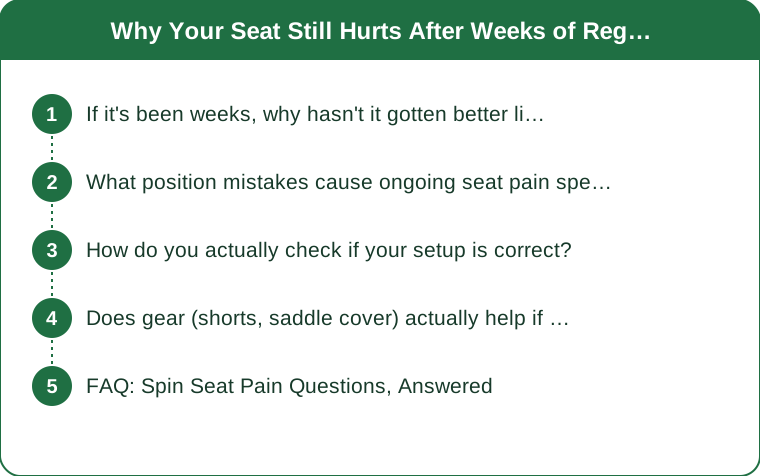
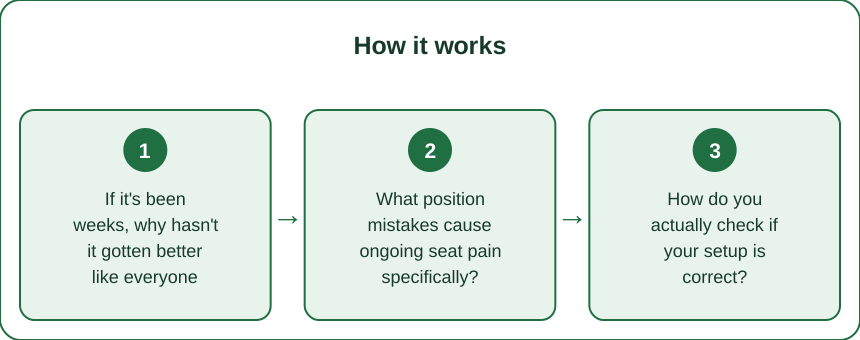
If it’s been weeks, why hasn’t it gotten better like everyone said?
Normal saddle adjustment (mild soreness fading within 2-3 rides) assumes the bike is actually set up correctly for your body. If pain persists or worsens past that window, the saddle height, tilt, or fore/aft position is very likely off — no amount of additional rides fixes a genuine fit mismatch, since you’re just repeating the same pressure error each time.
What position mistakes cause ongoing seat pain specifically?
Saddle too high forces you to rock side to side to reach the pedals, creating friction and uneven pressure with every stroke. Saddle too low puts more weight directly on the saddle instead of distributing it through your legs. Saddle tilted even slightly nose-down shifts your weight forward onto sensitive tissue that isn’t built to bear it; nose-up concentrates pressure on the sit bones incorrectly.
The fore/aft position (how far forward or back the saddle sits) also matters — too far back changes your reach to the handlebars and shifts pressure distribution in ways that compound over a 45-minute class.

How do you actually check if your setup is correct?
Saddle height: with your heel on the pedal at the bottom of the stroke, your leg should be almost fully extended, with a slight bend. Switch to the ball of your foot in normal riding position and the bend should look natural, not cramped or overextended.
Saddle should be level, not tilted, as a starting point — small adjustments from level are fine once you know your baseline, but level is the correct default, not nose-down for comfort (it feels better in the first minute and causes more pressure over a full class).
Most studios have staff who’ll check your setup before class if you ask — this is a completely normal request and takes under a minute.
Does gear (shorts, saddle cover) actually help if the fit is correct?
Yes, meaningfully, once the fit itself is right. Padded cycling shorts reduce friction and add cushioning; a gel saddle cover adds extra padding on top of your studio’s saddle. But gear layered on top of an incorrect fit just adds cushioning to the wrong pressure points — it can mask the problem temporarily without fixing the underlying cause, which is why some people add padding and still hurt weeks later.
FAQ: Spin Seat Pain Questions, Answered
Is some seat discomfort just permanent for regular spin riders?
No — with a correct fit, most riders reach a baseline of minimal discomfort, not chronic pain. Ongoing pain is a signal to check fit again, not something to accept indefinitely.
Could a different bike or brand actually fix it?
Sometimes — saddle shape varies between bike models, and a saddle that doesn’t match your sit bone width can cause persistent discomfort regardless of position. If fit adjustments don’t help, trying a different bike in the same studio is a reasonable next step.
Should sharp or numb pain be treated differently than general soreness?
Yes — numbness or sharp, localized pain (rather than general soreness) is worth addressing with a proper fit check immediately and possibly a doctor if it persists. This is general information, not medical advice.
TL;DR:
- Pain persisting past 2-3 weeks usually means a genuine fit issue, not a slower personal adjustment
- Check saddle height, level tilt, and fore/aft position — most studio staff will help for free
- Padded shorts and saddle covers help most once the underlying fit is actually correct
- Numbness or sharp pain warrants a fit check and possibly a doctor, not just more patience
Persistent seat pain almost always has a specific, checkable cause — it’s rarely just something you have to tough out longer.
Keep Reading
This article is for general informational and styling purposes only. Fit, sizing, and product availability may vary.