Why Your Seat Still Hurts After Months of Spin Class (and the Real Fix)
Quick Answer: Persistent seat soreness after months of riding usually means the seat height, tilt, or fore-aft position is off, not that you need to ‘toughen up.’ Check seat height first — it’s the most common and most fixable culprit.
Everyone told you it gets better after a few weeks. For a lot of riders it genuinely doesn’t, and the reason is usually sitting right there in the bike setup, not in your body’s ability to adapt.
Why doesn’t seat soreness fade the way people expect?
If the seat height, tilt, or horizontal position is wrong, every single ride reinforces the same pressure points rather than allowing your body to adapt, since the underlying mechanical problem never changes. Genuine adaptation happens when the setup is correct and your body is just building tolerance — a wrong setup means there’s nothing to adapt to.
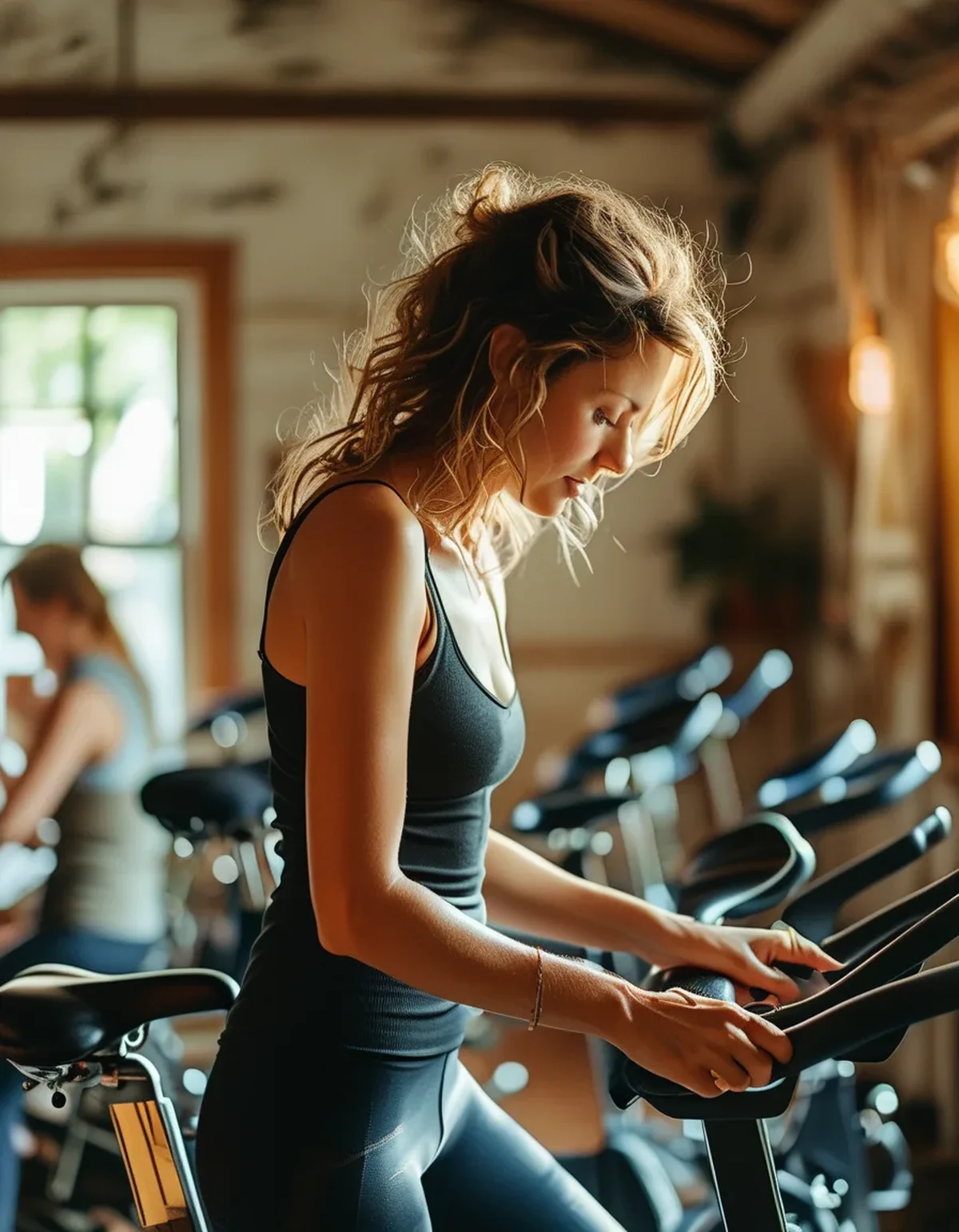
Many riders default to whatever height the bike was left at by the previous class member, which is often not correctly matched to their own body at all.
What’s the single most important adjustment to check first?
Seat height: stand next to the bike and set the seat roughly level with your hip bone, then fine-tune so your knee has a slight bend (not fully straight) at the bottom of the pedal stroke. A seat that’s too low forces more weight onto the saddle itself rather than your legs doing the work.
This single adjustment resolves a large share of chronic seat discomfort, since a too-low seat is the most common setup mistake in group spin classes specifically.
What Nobody Tells You About Saddle Tilt
A saddle tilted even slightly nose-down shifts more of your body weight forward onto sensitive pressure points, while a nose-up tilt creates pressure and chafing at the back — most riders never think to check this because it’s a small adjustment easy to overlook. A close-to-level tilt, adjusted a few degrees based on comfort, resolves discomfort for many riders who assumed it was just something to push through.
This adjustment is available on nearly all spin bikes but is rarely explained during a class, so most riders never realize it’s an option.
Does padded shorts fix the problem if the setup is wrong?
Padded shorts help cushion pressure but can’t fully compensate for an incorrect seat position — they reduce the symptom without addressing the actual cause. If soreness persists even with padded shorts after a proper setup check, that’s a stronger signal something in the bike position specifically needs adjusting.
Using padded shorts alongside a correctly adjusted seat gives the best result — treat them as complementary, not as a substitute for proper setup.
FAQ: Spin Bike Seat Questions, Answered
How do I know if my seat height is wrong?
If your knee is nearly fully straight at the bottom of the pedal stroke, the seat is likely too low; if you’re rocking side to side to reach the pedals, it’s likely too high.
Should the seat be tilted at all?
Most riders do best with a close-to-level tilt, adjusted a couple degrees based on personal comfort rather than a steep angle either way.
Will soreness ever fully go away with correct setup?
Most riders see significant improvement within a few rides once the seat position is corrected, though some initial adaptation time is still normal.
TL;DR:
- Persistent seat soreness usually points to a setup problem, not a toughness problem
- Seat height is the most common and most impactful adjustment to check first
- Saddle tilt even a few degrees off can shift pressure onto sensitive areas
- Padded shorts help but don’t replace a correctly adjusted seat position
Before your next class, take 30 seconds to reset the seat height yourself rather than trusting whatever it was left at.
Keep Reading
This article is for general informational and styling purposes only. Fit, sizing, and product availability may vary.