Why Chasing High Cadence in Spin Class Without Enough Resistance Is a Wasted Workout
Quick Answer: Spinning fast with little resistance raises your heart rate but produces almost no force per pedal stroke, so it builds far less strength and burns less energy than a moderate cadence against real load. The fix: keep resistance high enough that a controlled, moderate cadence takes genuine effort — if your legs feel like they’re flailing, add the knob.
You’re twelve minutes into class, legs whirling, breathing hard, entirely convinced you’re crushing it.
Then the instructor says “add a quarter turn” and your legs immediately discover they’ve been doing approximately nothing.
Spinning the pedals as fast as possible feels like the hardest-working move in the room, and it genuinely does raise your heart rate. But without enough resistance dialed in, that speed is mostly unloaded motion — burning less energy and building far less strength than a slower cadence against real load would.
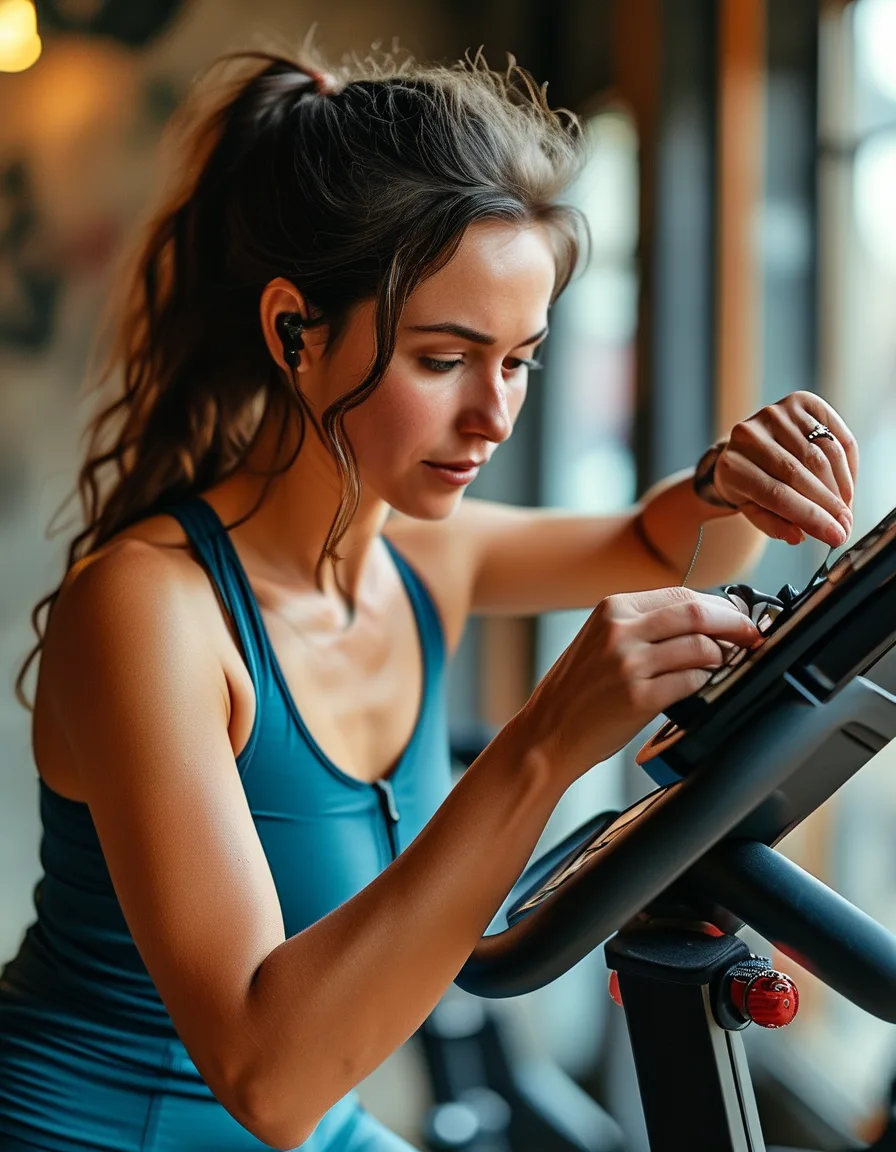
Why Does Fast Pedaling Feel So Effective?
Because your body has a very loud, very fast signal for effort — and it isn’t force.
Rapid leg turnover spikes your heart rate quickly. You get breathless within a minute or two, your legs feel hot, and everything about the sensation says this is hard. The knob, meanwhile, sits untouched at a setting that would let a bicycle roll downhill on its own.
The perception of intensity and the actual mechanical work are two different measurements, and in a dark room with loud music, only one of them is available to you.
There’s also a social element. High cadence looks fast. It looks like effort. Nobody in the room can see your resistance setting, and the fastest legs read as the hardest worker — which is a genuinely poor incentive structure for a strength stimulus.
What Does Resistance Actually Do That Cadence Doesn’t?
Force per pedal stroke.
When you pedal against meaningful resistance, your quads, glutes and hamstrings have to generate real force on every single stroke. That mechanical loading is the same stimulus that drives strength adaptation in the weight room — it’s why hill repeats build legs and flat spinning doesn’t.
Take the resistance away and your legs are essentially just moving quickly. Fast, yes. Loaded, no. You’ve kept the tempo and removed the training stimulus, which is roughly like doing bicep curls very quickly with an empty hand.
Energy cost follows the same logic. Total work done is force multiplied by distance — and if force is near zero, spinning faster multiplies a very small number. That’s why an hour of unloaded spinning burns considerably less than the numbers on the console suggest.
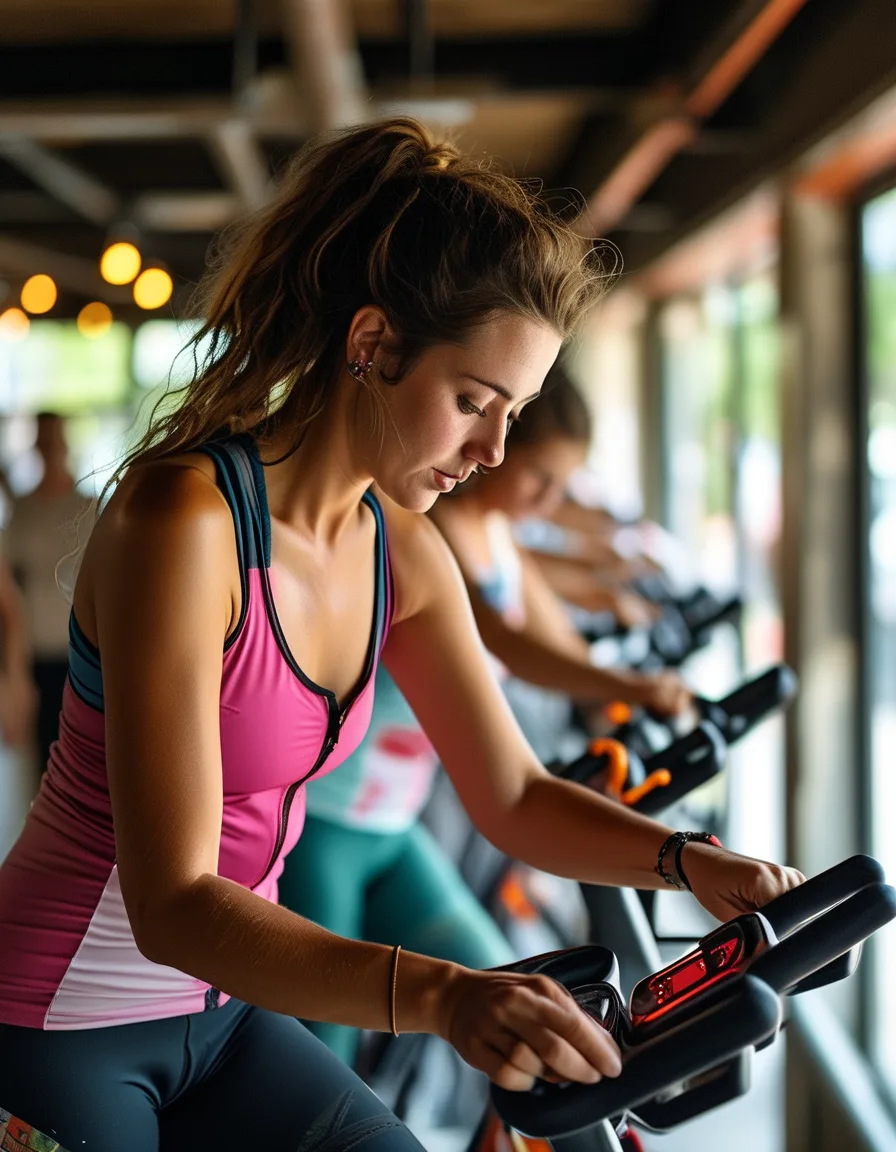
Why Do These Two Feel Interchangeable?
Because heart rate lies to you here.
High-cadence-low-resistance riding and moderate-cadence-high-resistance riding can produce very similar heart rates. Both leave you breathing hard. Both feel like cardio, because both are cardio.
The difference is that only one of them is also doing meaningful work on your legs. Your cardiovascular system can’t tell you that — it responds to overall demand, not to force per stroke. So the feedback you’re getting in class is real, but it’s answering a narrower question than you think it’s answering.
This is why people plateau on spin after a few months. The cardio adaptation happens, the strength adaptation never starts, and the workout stops producing change while continuing to feel hard.
5 Mistakes Everyone Makes With the Resistance Knob
1. Never touching it after the warm-up. The single most common one. Whatever you set at minute two rides with you for forty-three more.
2. Adding resistance and then dropping cadence to compensate. If the instructor calls a hill and you add load but let your legs slow to a crawl, you’ve traded one problem for another. Aim for a controlled slowdown — roughly 60-80 RPM on a climb — not a stall.
3. Bouncing in the saddle. If your hips are bouncing at high cadence, that’s the tell that resistance is too low. The knob is also your stability control, and bouncing is hard on your lower back for no return.
4. Chasing the leaderboard number instead of the load. Output metrics on studio bikes combine cadence and resistance, but it’s easy to game them with pure leg speed on some setups. The third mistake surprises even regulars, but this is the one that quietly costs the most progress.
5. Assuming the instructor can see your setting. They can’t, in most classes. Nobody is checking. The accountability is entirely yours, which is exactly why the knob stays where it is.
How Do You Balance Cadence and Resistance Properly?
A practical framework:
- Flat road / recovery: 80-100 RPM with light but present resistance. You should still feel the pedals pushing back.
- Rolling / tempo: 70-85 RPM with moderate load. Sustainable, but you’d notice if it went on forever.
- Climb: 60-75 RPM with heavy resistance. Slow, deliberate, genuinely hard. This is where the strength work happens.
- Sprint: high cadence with real resistance. A sprint against nothing is not a sprint.
The check-in test: every few minutes, ask whether your legs feel genuinely loaded or just fast. If you could hold this cadence indefinitely without your legs complaining, the knob needs a quarter turn. Your legs should be the limiting factor at least as often as your lungs.
Kit note: proper load means you’ll be out of the saddle more, which is where a waistband that stays put earns its money. A pair of high waist leggings with a compressive, non-rolling waistband beats anything you have to reset every climb — and you’ll notice it most on the exact intervals that matter.
A balance note, and when to see a professional: more resistance isn’t infinitely better. Grinding at very heavy load with poor bike setup is a common source of knee pain. Get your saddle height checked — a rough guide is a slight bend in the knee at the bottom of the stroke — and back off if you feel pain rather than muscular fatigue. Persistent knee, hip or lower back pain after riding is worth a physical therapist’s assessment rather than more sessions.
FAQ
What’s a good cadence for spin class?
Most useful riding sits between 60 and 100 RPM depending on the effort — climbs at the lower end with heavy resistance, flats at the higher end with moderate load. Sustained cadences above about 110 RPM with light resistance are usually a sign the knob needs turning, not a sign of fitness.
Does spinning without resistance still count as exercise?
Yes, as light cardio. Your heart rate rises and you’re moving, which is genuinely better than not. It just isn’t doing the leg-strength work that makes spin classes worth the time investment, and the calorie burn is a fraction of what a loaded ride delivers.
How do I know if my resistance is high enough?
Two tells: your hips shouldn’t bounce in the saddle, and you shouldn’t be able to hold the cadence comfortably forever. If your legs feel like they’re chasing the pedals rather than pushing them, add a quarter to a half turn and see how the effort changes.
TL;DR
- Fast legs with no load feels hard and does little. Heart rate rises, force per stroke doesn’t.
- Resistance is the strength stimulus. Cadence alone is just tempo.
- The two feel identical because heart rate can’t distinguish them — which is why plateaus happen.
- Target ranges: 60-75 RPM heavy on climbs, 80-100 RPM with real load on flats.
- Bouncing in the saddle is the clearest sign your resistance is too low.
- Check in every few minutes: loaded, or just fast? Your legs should limit you as often as your lungs.
Keep Reading
This article is for general informational and styling purposes only. Fit, sizing, and product availability may vary.