Why Your Spin Numbers Look Completely Different on a Different Bike
Quick Answer: Spin bike consoles aren’t standardized across brands or even across bikes in the same studio — resistance dials, RPM sensors, and power estimates are calibrated differently machine to machine, so the exact same physical effort can show up as a completely different number on a different bike.
Same legs, same effort, same instructor cueing 80 RPM — and the console next to you says something entirely different from the one you rode last week.

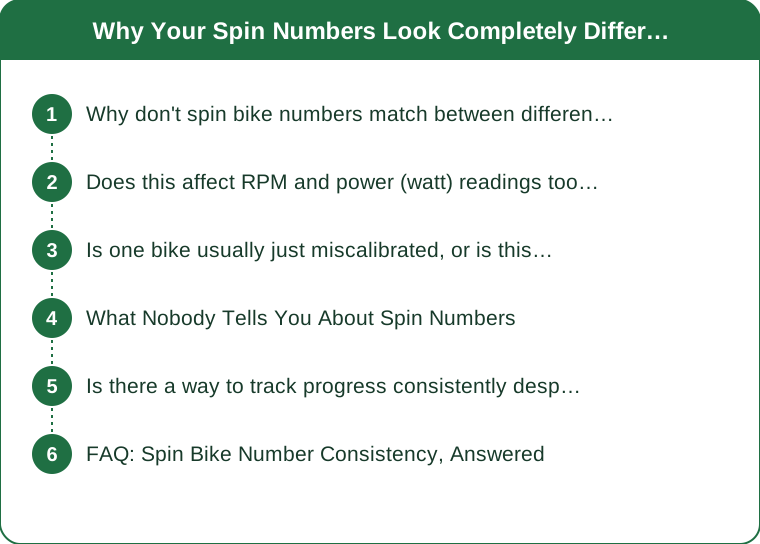
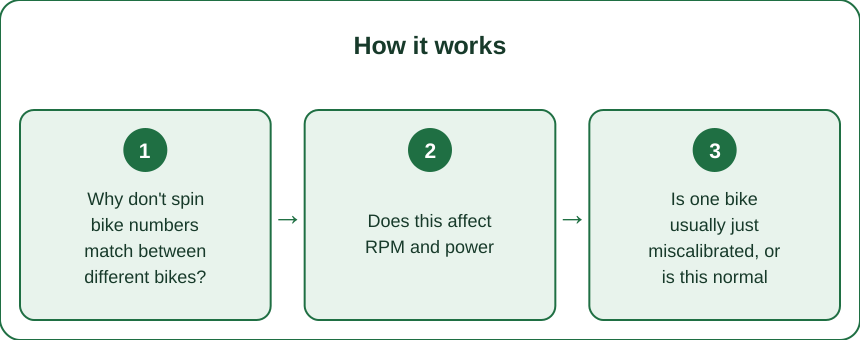
Why don’t spin bike numbers match between different bikes?
Resistance knobs on most spin bikes are a mechanical or magnetic friction dial, not a calibrated, standardized unit — turning to “15” on one bike doesn’t produce the same physical resistance as “15” on a different bike, even the same model, once wear and calibration drift are factored in. The number on the dial is a relative reference, not an absolute measurement, which is the core reason cross-bike comparisons rarely line up cleanly.
Does this affect RPM and power (watt) readings too, or just resistance?
It affects all three to varying degrees — RPM sensors can have small calibration differences, and power estimates (on bikes that show watts) are typically calculated from a formula combining resistance and RPM that’s specific to that bike’s software, so two bikes can output different wattage estimates from what feels like an identical pedaling effort.
Is one bike usually just miscalibrated, or is this normal across an entire studio?
It’s usually normal, not a single broken bike — most studios don’t recalibrate every bike to match an identical baseline regularly, and older bikes naturally drift further from spec over time through belt or magnet wear, so a spread of readings across a room, even mid-pack, is expected rather than a sign anything is wrong with your effort.

What Nobody Tells You About Spin Numbers
Instructors cue resistance and RPM targets as general guidance, not lab-precise instructions, because they already know the numbers vary bike to bike. Your own perceived exertion — breathing, leg burn, sweat — is a more reliable guide to whether you’re working hard enough than matching a specific number the person next to you sees. Chasing an exact number match across different bikes is chasing a moving target that was never designed to be consistent in the first place.
Is there a way to track progress consistently despite this inconsistency?
Yes — sticking to the same bike number in the same studio whenever possible removes most of the variability, letting resistance and RPM trends over time actually mean something. For anyone rotating bikes, tracking heart rate zones or perceived exertion instead of raw resistance numbers gives a more bike-independent way to measure real progress.
FAQ: Spin Bike Number Consistency, Answered
Should I ask the studio staff to check calibration if numbers feel really off?
Yes — if a bike feels dramatically harder or easier than usual at the same resistance number, flagging it to staff is reasonable since belts and magnets do wear unevenly and occasional recalibration is a normal maintenance task.
Do newer smart bikes (with app connectivity) solve this problem?
They reduce it somewhat, since many newer smart bikes use more consistent electromagnetic resistance and computed power metrics, but even among smart bikes, cross-brand comparisons still aren’t perfectly apples to apples.
Is it worth comparing my numbers to a friend’s on a different bike at all?
Not really for precision — it’s more useful as a loose motivational comparison than a literal fitness benchmark, since the underlying hardware differences make an exact comparison unreliable.
TL;DR:
- Resistance dials aren’t standardized units — the same number means different things on different bikes
- RPM and power (watt) readings can also vary due to bike-specific calibration and formulas
- A spread of numbers across a studio’s bikes is normal, not a sign of a broken machine
- Perceived exertion is a more reliable same-day effort guide than matching an exact number
- Sticking to one bike, or tracking heart rate instead, gives more consistent progress tracking
The console number is a rough guide, not a universal scorecard — your effort is the real metric.
Keep Reading
This article is for general informational and styling purposes only. Fit, sizing, and product availability may vary.