In Spin Class, Cadence Matters More Than Resistance for Beginners — Here's Why
Quick Answer: Beginners who chase high resistance before controlling cadence tend to bounce in the saddle and strain their knees. Get comfortable holding a steady 80-100 RPM cadence first, then layer resistance on top — not the other way around.
It’s tempting to crank resistance to feel like you’re “really working,” but if your pedal stroke is choppy and your hips are bouncing, resistance is amplifying bad mechanics, not building fitness.
Why does cadence matter more than resistance early on?
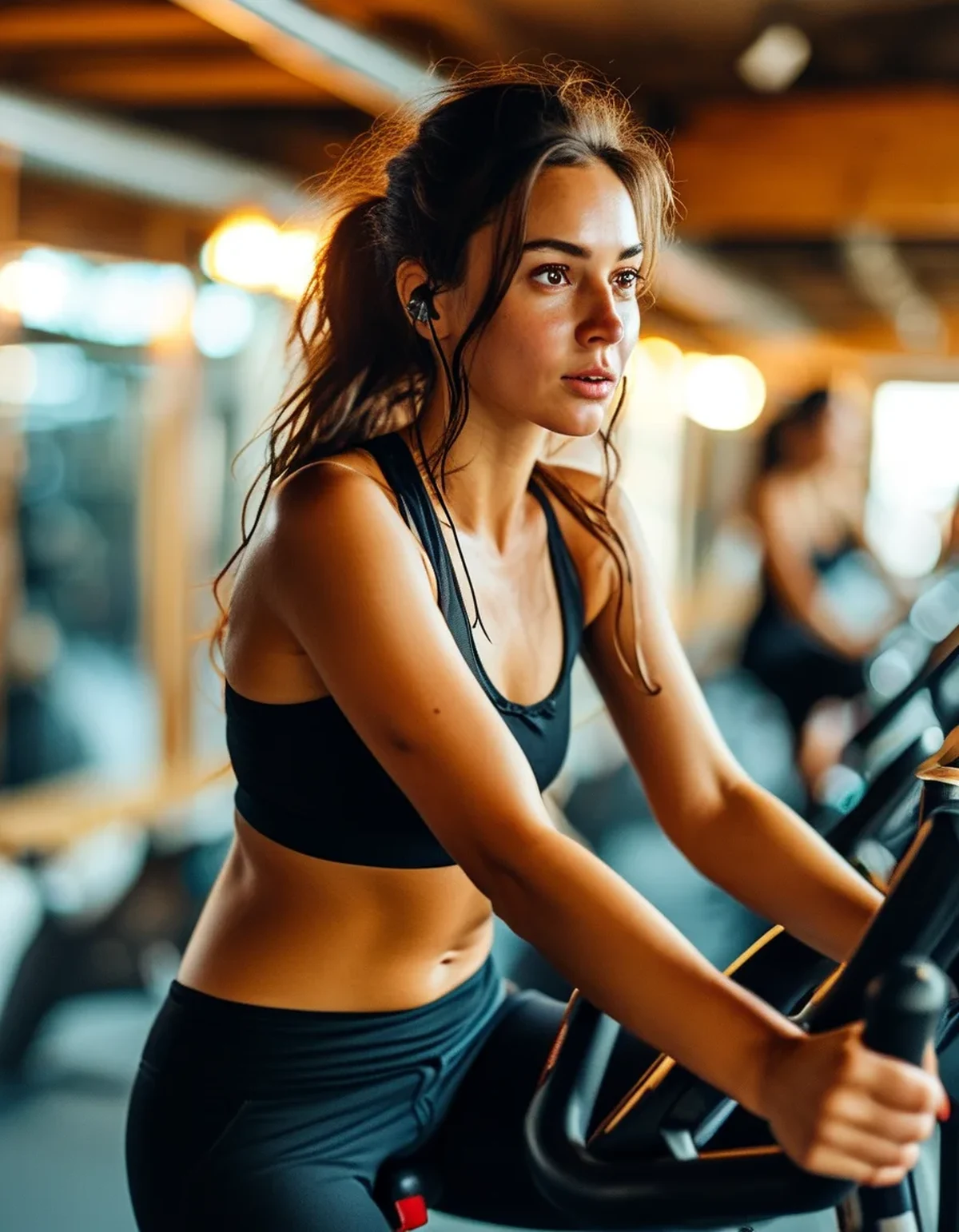
Cadence — how fast you’re pedaling in RPM — determines whether your pedal stroke is smooth and controlled or choppy and bouncing. Resistance just adds load on top of whatever pattern you already have.
Add heavy resistance to a choppy stroke and you amplify the bounce, which stresses the knees and lower back far more than the same resistance applied to a smooth, controlled stroke.
What’s a good target cadence for beginners?
80-100 RPM for most seated flat-road segments is the commonly taught beginner range — most spin bike consoles display RPM directly, so this is measurable, not a feeling to guess at.
Climbs typically drop to 60-80 RPM with more resistance; sprints push above 100. Learn the flat-road number first before worrying about the variations.

5 Mistakes Beginners Make With the Resistance Knob
1. Starting too high to “feel it working.” Build the base cadence habit at moderate resistance first.
2. Never checking the console for actual RPM. Guessing cadence by feel is unreliable for weeks; use the number.
3. Matching resistance to the instructor’s cues without checking your own bounce. Everyone’s bike calibration and fitness differ — your hips staying still is the real signal, not the exact resistance number called out.
4. Dropping resistance to zero on climbs to keep cadence up. Climbs are supposed to slow cadence and raise resistance — that’s the point of the segment.
5. Ignoring hip bounce entirely. Visible up-and-down bouncing in the saddle at any resistance level means it’s too high for your current cadence control.
How do you know you’ve got the balance right?
Your hips should stay quiet and level in the saddle regardless of resistance level — that’s the single best visual check, more reliable than RPM numbers alone.
If you can hold a steady RPM with still hips, you’re ready to add resistance incrementally; if hips bounce at any point, drop resistance before increasing cadence again.
FAQ: Spin Class Cadence Questions, Answered
Is high resistance ever more important than cadence?
On climb segments, yes — resistance takes priority and cadence intentionally drops, but hip stillness still matters at any resistance level.
Why do my knees hurt after spin class specifically?
Often it’s high resistance combined with poor cadence control causing bounce, or seat height being off — check bike setup and cadence before assuming it’s a fitness issue.
How long does it take to build good cadence control?
Most beginners feel noticeably more controlled within 3-4 classes once they start actually watching the RPM number instead of guessing.
TL;DR:
- Cadence (RPM) determines stroke smoothness; resistance just loads whatever pattern exists
- Target 80-100 RPM on flats before layering on resistance
- Watch for hip bounce — that’s the real signal resistance is too high
- Climbs intentionally drop cadence and raise resistance; that’s expected, not a mistake
Next class, check your RPM number before you touch the resistance knob.
Keep Reading
This article is for general informational and styling purposes only. Fit, sizing, and product availability may vary.