Indoor Cycling for Beginners: What Do the First Five Classes Actually Feel Like?
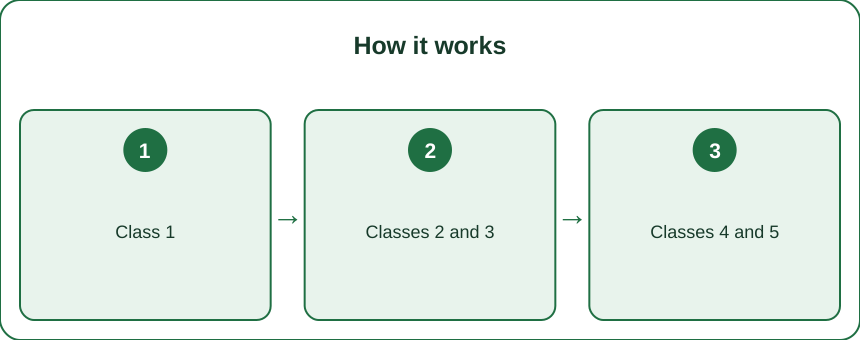
Quick Answer: The first class is mostly about the bike setup and the shock of the effort. Classes two and three are where seat discomfort peaks and starts to fade. By classes four and five the format is familiar enough that you can focus on effort rather than survival — which is when most people start enjoying it.
Nobody tells beginners that the first three classes are the hardest part and that it genuinely does resolve.
Here is the honest version of each one.
This is general information, not medical advice.
Class 1: The setup matters more than the workout
The single biggest determinant of whether your first class goes well is a fifteen-minute conversation before it starts.
Arrive early and ask for a setup. Every studio expects this and most instructors will do it gladly. Three things need to be right:
- Saddle height: with your heel on the pedal at the bottom of the stroke, your leg should be almost straight. With the ball of the foot on the pedal — where it belongs during riding — that gives a slight bend at the bottom. Too low is the most common beginner error and it is the main cause of knee pain.
- Saddle fore-aft: with the pedals level, your forward knee should sit roughly above the pedal spindle.
- Handlebar height: start higher than you think. Beginners are almost always more comfortable with the bars up, and you can lower them over the following weeks.
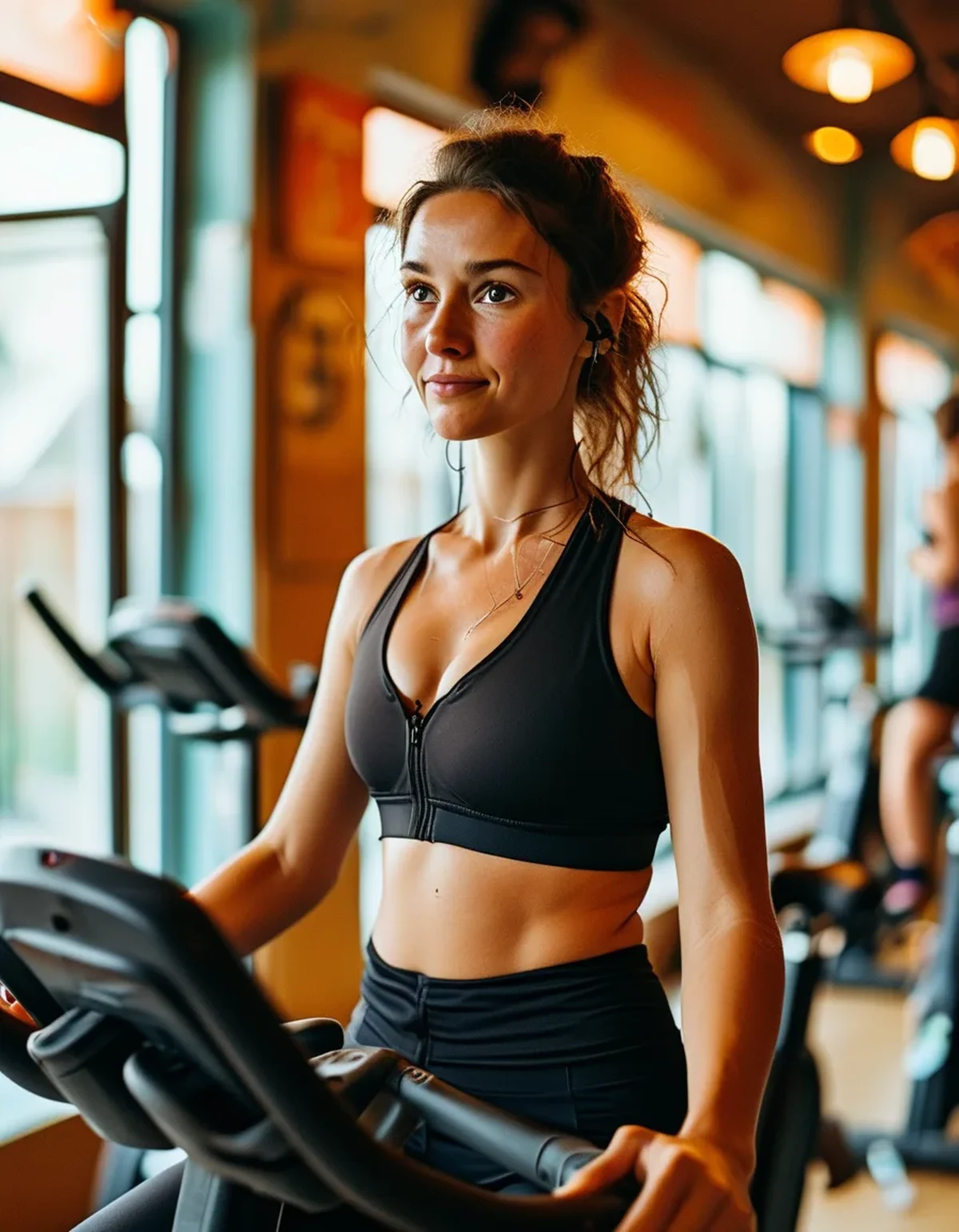
What the class itself feels like: harder than expected in the first ten minutes, and genuinely disorienting. You will not know what the resistance knob is doing, the cues will make limited sense, and everyone else will appear to know exactly what they are doing.
What to actually do: ignore the numbers entirely, keep the resistance high enough that your legs are not spinning uncontrollably, and sit down whenever you need to. There are no marks for standing.
Is it normal to feel like the worst person in the room?
Universally reported, and almost entirely invisible to everyone else, who are watching their own screens.
Classes 2 and 3: The seat, and the part nobody warns you about
The saddle discomfort peaks here
This is the most common reason beginners quit, and it is worth being direct about: the first several rides are uncomfortable for nearly everyone, and it improves substantially within a few weeks.
What is happening is a combination of unfamiliar pressure on tissue that is not used to it and, frequently, a setup issue. It is not a sign that the bike is wrong for you.
What genuinely helps:
- Padded cycling shorts. The single most effective purchase, and more effective than a padded seat cover. Worn without underwear, which is the part nobody mentions.
- Getting the saddle height right. Too low increases pressure on the front of the saddle considerably.
- Getting out of the saddle briefly every few minutes, which restores blood flow.
- Going more often rather than less. Two or three shorter rides a week adapts the tissue faster than one weekly ride, which keeps restarting the process.
What nobody warns you about: the resistance knob
Beginners consistently ride with too little resistance and too high a cadence, because spinning fast feels like working hard and requires less effort from the legs.
It is the wrong trade. Very low resistance at very high cadence produces a bouncing ride, loads the knees oddly, and does less work than it feels like. If your hips are bouncing in the saddle, add resistance.
The rule that works: there should always be enough resistance that you can feel the pedals pushing back. If you could let go and keep spinning, it is too light.
Classes 4 and 5: When it starts working
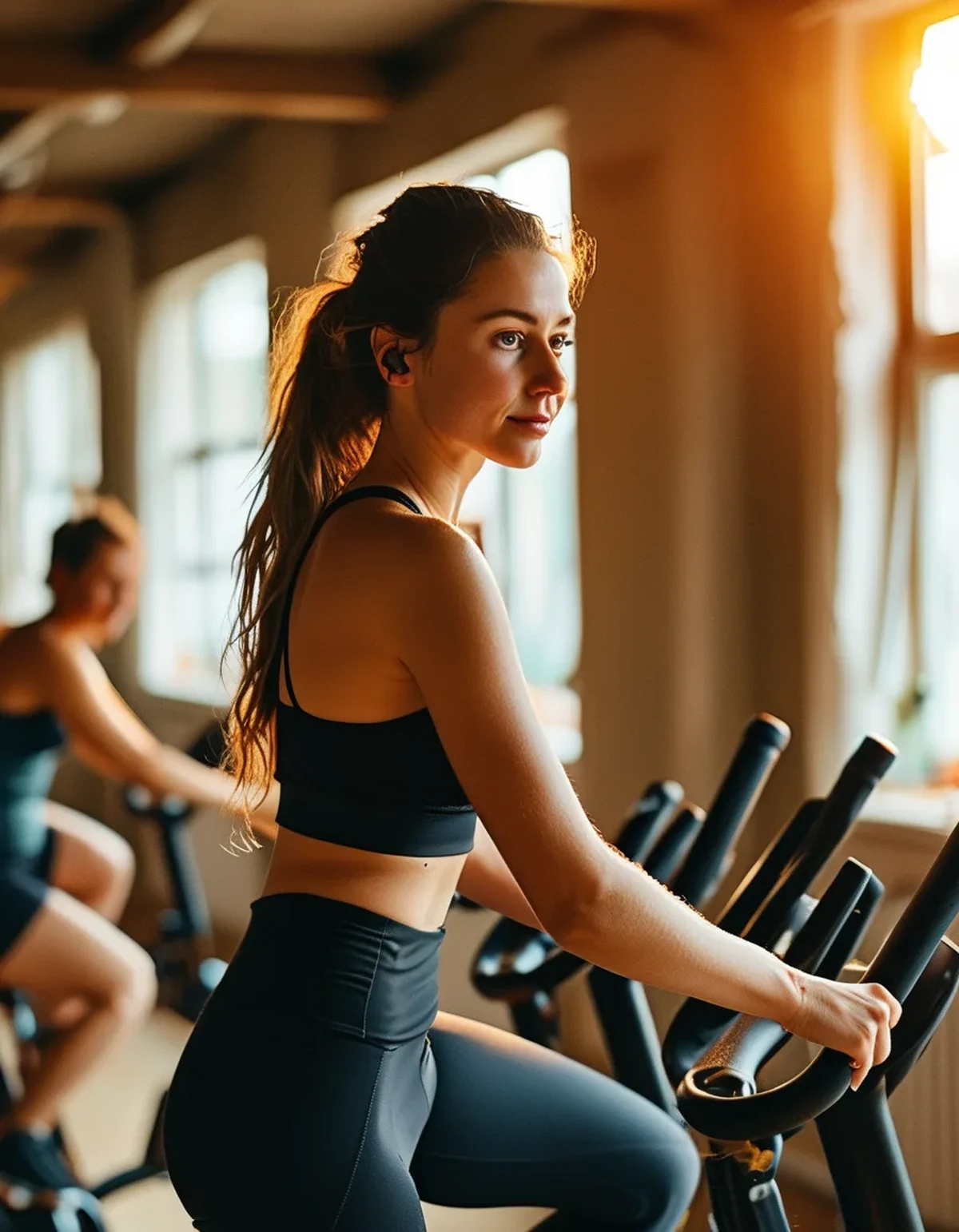
By the fourth class the format stops being novel, and this changes the experience more than fitness does.
What has usually settled by now:
- You know the vocabulary. Cadence, resistance, positions, the structure of an interval. Cognitive load drops sharply and you can spend attention on effort instead of on decoding.
- The saddle discomfort has reduced noticeably, if you have been going regularly.
- You know what your own effort levels feel like, which is what allows you to actually train rather than follow.
What is still hard, appropriately: the intervals. That does not go away, and it should not.
What to focus on now: breathing. The most useful single cue for indoor cycling is to let your breathing set your resistance — pick a level where your breathing is heavy but rhythmic and controlled rather than ragged. Legs give misleading feedback in the first month; breathing does not.
This is also the point to stop comparing your numbers to the person next to you. Different bikes are not calibrated to each other, and output figures are not comparable between machines even in the same studio. Track yourself against yourself.
How often should a beginner go?
Two or three times a week is a good starting point. It is frequent enough to adapt and infrequent enough to recover, and it gets you through the uncomfortable early phase faster than once a week does.
What nobody tells you about starting indoor cycling
Everyone is looking at their own handlebars. The self-consciousness of the first classes is real and unwarranted. Back row is a perfectly good place to start and many regulars never move from it.
Your legs will feel heavy for two days after the first class. That is normal delayed soreness from unfamiliar work, and it is dramatically less after the second and third classes. Do not conclude anything from it.
Hydration matters more than in most classes because indoor studios are warm, there is no airflow from moving, and sweat rates are high. Bring more water than you think, and expect a warm studio to make the same class feel significantly harder.
Shoes: cages are fine to start. Clip-in shoes are more efficient and more comfortable over longer rides, and they are not a prerequisite. Most studios have bikes with cages on one side. Buy shoes after you know you are staying, not before the first class.
A towel is not optional. Everyone forgets this once.
Autumn is when studios fill up. Classes get busier as outdoor riding and running become less appealing, so booking ahead matters more from about now onward — and a fuller studio runs warmer, which is a real change in how the same class feels.
Knee pain is a setup problem until proven otherwise. It is almost never a sign that indoor cycling does not suit you. Saddle too low is the usual culprit, and it is a two-minute fix.
FAQ: Indoor Cycling Beginner Questions, Answered
Do I need special shoes for my first class?
No. Trainers with a firm sole in the toe cages work perfectly well. Stiff-soled cycling shoes become worth it once you are riding regularly and want more comfort and efficiency.
What should I wear?
Fitted or tapered bottoms that will not catch, a top you are comfortable sweating in, and padded shorts once you decide to continue. Loose wide-leg trousers are the one thing to avoid near a chain guard.
How hard should the first class be?
Hard, and you should be able to complete it. Ignore the leaderboard, ride at an effort where you can still control your breathing, and treat the first class as calibration.
Will indoor cycling make my legs bulky?
No. It is primarily endurance work, and building substantial muscle requires progressive heavy resistance training over a long period. What most people notice after a few months is improved endurance and definition.
How long until I notice I am fitter?
Many people notice a difference in how the same class feels within three to four weeks of consistent attendance — usually as recovering faster between intervals rather than as a dramatic change in top-end effort.
TL;DR:
- Arrive early to class one and get a proper bike setup; saddle too low is the main cause of knee pain.
- Saddle discomfort peaks around classes two and three and improves substantially with regular attendance.
- Padded shorts help more than a padded seat cover, and going two or three times a week adapts you faster than once.
- Add resistance if your hips bounce — too light at high cadence does less than it feels like.
- Let your breathing set your resistance, and never compare numbers between bikes.
The first three classes are the hardest part of indoor cycling, and almost nobody says so. Getting through them is mostly a matter of knowing they end.
This is general information, not medical advice.
Keep Reading
This article is for general informational and styling purposes only. Fit, sizing, and product availability may vary.