Indoor Cycling for Beginners: What to Know
Quick Answer: Indoor cycling classes for beginners are 45-minute, low-impact cardio rides where you set your own resistance. The three things that decide whether your first class goes well: get staff to set your bike (seat at hip height, slight knee bend at the bottom), keep real resistance on the flywheel, and let yourself sit down whenever you want.
The setup is what intimidates people. Not the workout — the bike.
You walk in, there’s a machine with four adjustment levers and a numbered dial, everyone else is already clipped in and chatting, and you have roughly ninety seconds to work out what any of it means before the lights go down.
That’s it. That’s the entire barrier. Solve the bike and indoor cycling is one of the friendliest workouts there is.

How Do You Set Up a Spin Bike?
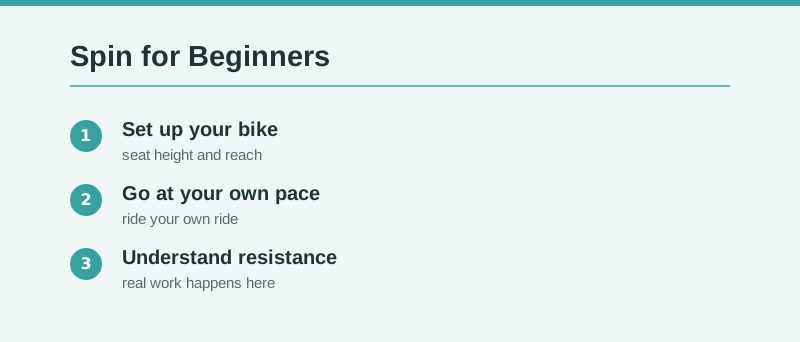
Arrive ten minutes early and ask a staff member to do it with you. Every studio expects this, and it takes ninety seconds.
The three adjustments that matter:
Seat height. Stand next to the bike — the saddle should sit roughly level with your hip bone. Sitting on it, at the bottom of the pedal stroke your knee should keep a slight bend, around 25–30 degrees. Never fully straight, never sharply bent. Too low is the classic beginner error and it’s the main cause of knee ache the next day.
Seat position forward/back. With the pedals level, your forward knee should sit roughly above the pedal axle. This one affects whether your back is comfortable at minute 35.
Handlebar height. Start higher than feels “serious.” Bars level with the saddle or above are far kinder on your back and neck for the first few classes. You can lower them over time.
Write your numbers down on your phone. Most bikes have numbered posts, and after class one you can set your own bike in fifteen seconds.
Why Does the Resistance Dial Matter?
Because it’s the difference between a workout and a wobble.
The resistance knob controls how hard the flywheel is to turn — turn it up and it’s a hill, turn it down and it’s a downhill spin. Beginners routinely do the same thing: keep resistance almost at zero and pedal as fast as possible. It feels hard, because your heart rate goes up. It builds very little.
Worse, it’s uncomfortable. With no resistance you bounce in the saddle, which is exactly what makes people decide spin isn’t for them.
Practical rule: you should always feel your legs pushing against something. If your hips are bouncing or your feet are outrunning the pedals, add resistance rather than removing it. Counterintuitive, but true.
The instructor will call out changes. Interpret them relative to your own dial — “add a quarter turn” from your baseline, not to some universal number. Nobody can see your setting, and two riders side by side can be doing completely different workouts and both be doing it right.
What Does a Beginner Class Actually Involve?
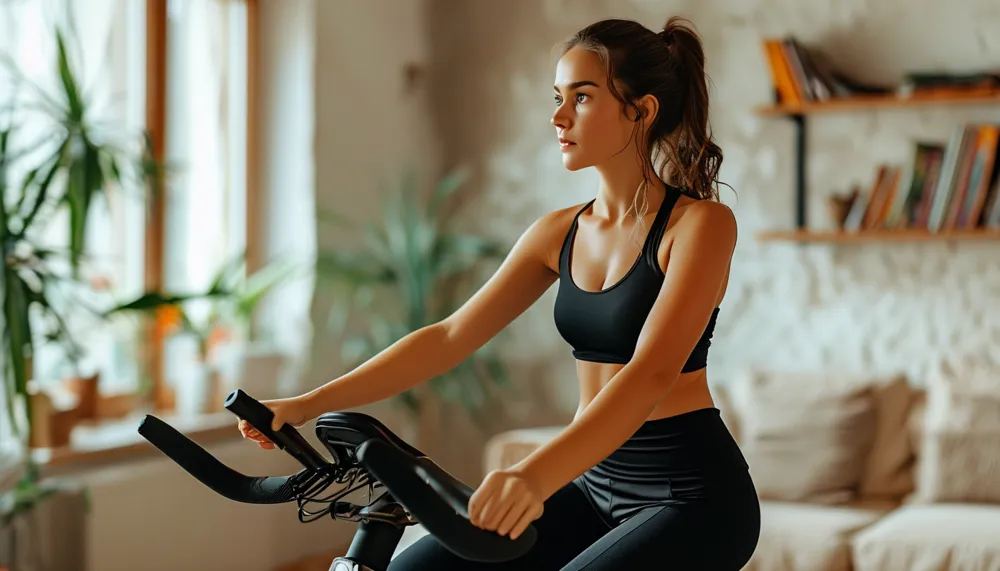
Expect a warm-up, then a series of intervals — seated flats, seated climbs, standing climbs, sprints — with recovery stretches between, then a cool-down and a floor stretch. Most classes run 45 minutes; express formats are 30.
For your first one:
- Take the back row. You can see the timing without feeling watched.
- Sit when the class stands. Standing climbs are genuinely harder and there’s no rule saying you must.
- Drop resistance freely. Nobody is checking.
- Drink whenever you want. You’ll sweat more than you expect in a room with 30 bikes.
- Aim to finish, not to keep up. That’s the whole goal for ride one.
Ride two is noticeably easier than ride one. Ride five is a different experience entirely.
5 Mistakes Everyone Makes in Their First Spin Class
1. Setting the saddle too low. Feels safer, hammers your knees. Slight bend at the bottom, always.
2. Spinning with no resistance. Bounces you around and builds nothing. Add a quarter turn.
3. Death-gripping the handlebars. Hands should rest, not clench. Tension in your shoulders is why your neck aches afterwards.
4. Wearing loose trousers. They catch on the flywheel and pedals. Fitted activewear is a safety point here, not a style one.
5. Going 100% on ride one. The most common reason people never come back. Run your first three classes at about 60% and let it build.
What to Bring
- Water — at least 500ml.
- A towel — you will absolutely need it.
- Fitted activewear, and padded shorts if you have them. Not essential for class one, extremely welcome by class three.
- Shoes — studios with clip-in pedals almost always lend cycling shoes free; just mention it’s your first class. Otherwise stiff-soled trainers.
Eat something light 1–2 hours before. Arriving on an empty stomach is a reliable way to feel awful in the third interval.
Mini FAQ
Are indoor cycling classes good for beginners?
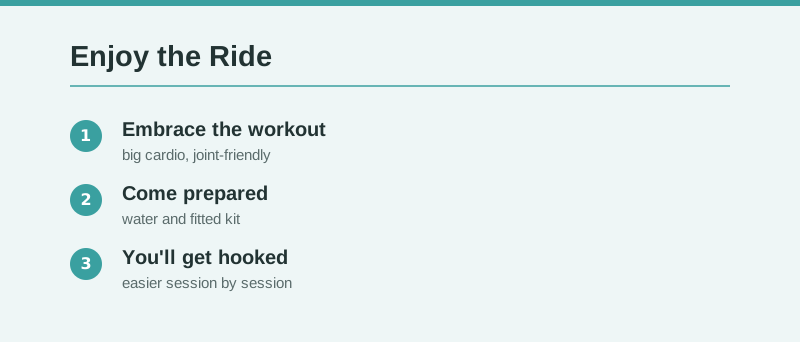
Genuinely, yes — better than most group formats. You control the intensity entirely through your own resistance dial, the room is dark, and the low-impact nature means you’re not risking the joint strain that comes with jumping or running. The only real learning curve is the bike setup.
How often should a beginner take spin classes?
Two to three times a week, with a rest day between the first few. That’s enough to build cardio fitness and adapt to the saddle without wrecking your legs. Saddle soreness for the first three or four rides is normal and does fade.
What’s the difference between indoor cycling and spin?
Practically nothing — “Spin” is a trademarked brand of indoor cycling, and the terms get used interchangeably. What varies more is studio style: some run rhythm-based rides choreographed to music, others focus on performance metrics like power and cadence. Try both and see which one you enjoy.
TL;DR
- The bike setup is the whole barrier — arrive 10 minutes early and have staff help.
- Saddle at hip height, slight knee bend at the bottom, bars higher than you think.
- Keep real resistance on. Bouncing in the saddle means you need more, not less.
- Sit when you want, drop resistance when you want — finishing is the win.
- Fitted clothes (loose trousers catch), water, a towel, and borrowed shoes.
- Two to three classes a week; ride five feels like a completely different sport.
Dial in your setup, use real resistance, and let the room’s darkness do the rest. See you in your first class.
Keep Reading
This article is for general informational and styling purposes only. Fit, sizing, and product availability may vary.