Does Standing During Spin Class Actually Burn More Calories Than Staying Seated?
Quick Answer: Standing during spin can burn somewhat more calories than seated riding at the exact same resistance and cadence, mainly because it engages more stabilizing muscle groups and often naturally increases effort output, but the calorie difference is driven more by the resistance and intensity you’re actually generating than by standing itself — a hard, high-resistance seated effort can burn more than a low-effort standing one.

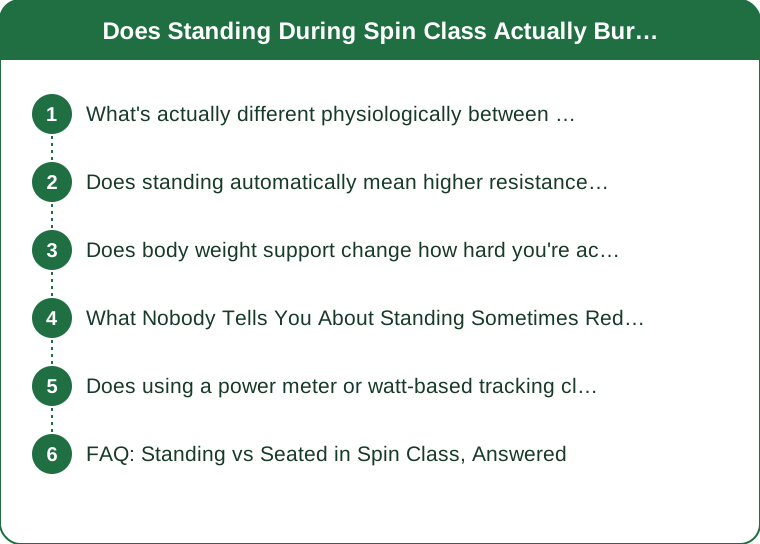
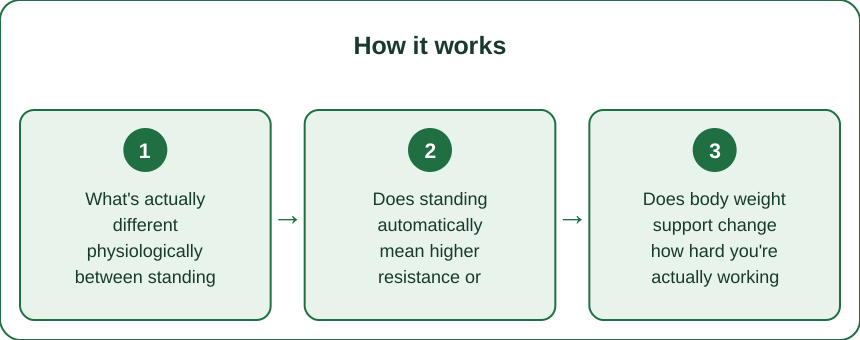
What’s actually different physiologically between standing and seated cycling?
Standing engages additional stabilizing muscles in the core, lower back, and even the arms and shoulders (supporting body weight through the handlebars) that seated riding, where the saddle bears your body weight, doesn’t require to the same degree — this additional muscle recruitment is the main mechanism behind any calorie difference, not something unique to the standing position itself beyond that added muscular engagement.
Does standing automatically mean higher resistance or effort, or is that a separate variable?
Standing and resistance level are technically independent variables, though in practice they’re often cued together — many instructors increase resistance specifically during standing segments, which is why standing climbs feel and often are harder, but the calorie burn difference tracks more directly with the resistance and power output than with the standing position by itself.
Does body weight support change how hard you’re actually working while standing?
Yes — while standing, more of your body weight is supported by your legs and core rather than the saddle, which does increase overall muscular demand somewhat independent of resistance level, contributing a modest additional calorie burn even at matched resistance, though this effect is smaller than the resistance-driven difference most instructors are cueing for.

What Nobody Tells You About Standing Sometimes Reducing Power Output for Less Experienced Riders
Riders newer to indoor cycling sometimes unconsciously reduce their effective pedaling power when standing, because balance and coordination demands compete with pure power output — for these riders, standing can actually result in lower measured power output (and lower calorie burn) than a well-executed seated effort at the same perceived difficulty, meaning technique and experience level change how this comparison plays out in practice.
Does using a power meter or watt-based tracking clarify this better than heart rate alone?
Yes — power output (measured in watts) reflects actual mechanical work being done and correlates more directly with calorie burn than heart rate, which can be elevated by standing’s postural demand somewhat independent of actual power output — riders with power-metered bikes can directly compare their own standing versus seated wattage at matched resistance to see how this plays out for their specific fitness level and technique.
FAQ: Standing vs Seated in Spin Class, Answered
Should beginners prioritize learning standing technique or focus on seated intensity first?
Most instructors recommend building comfortable seated intensity and pacing first, then gradually introducing standing technique once basic cycling mechanics and balance feel secure.
Does standing put more strain on the knees than seated cycling?
Standing can increase knee strain if resistance is too high relative to the rider’s strength, since more body weight moves through the knee joint during the standing pedal stroke, making proper resistance calibration important specifically for standing segments.
Is alternating between standing and seated better for overall calorie burn than staying in one position the whole class?
Yes — alternating engages a broader range of muscle groups and helps sustain higher average effort across a full class compared to staying in one position throughout, which is part of why most class formats cue regular transitions between the two.
TL;DR:
- Standing engages more stabilizing muscles, contributing a modest calorie burn increase on its own
- The bigger calorie difference usually comes from resistance and power output, not standing itself
- Less experienced riders sometimes reduce power output while standing due to balance demands
- Power meters give a clearer comparison than heart rate, which standing’s posture can inflate somewhat
Standing helps, but it’s the resistance and effort you’re actually generating that drives most of the calorie difference, whether you’re sitting or standing while you generate it.
Keep Reading
This article is for general informational and styling purposes only. Fit, sizing, and product availability may vary.