Cadence vs. Resistance in Spin Class: Which One Actually Matters More?
Quick Answer: Cadence (pedal speed, measured in RPM) and resistance (how hard the pedal pushes back) work together to determine intensity — for most riders, keeping cadence in a controlled 60-100 RPM range while adjusting resistance is safer and more effective than chasing high RPM with low resistance, which mainly stresses the knees.
Spin class instructors call out both numbers constantly, and new riders often fixate on one (usually resistance, as a proxy for effort) while ignoring the other, which is where form problems start.

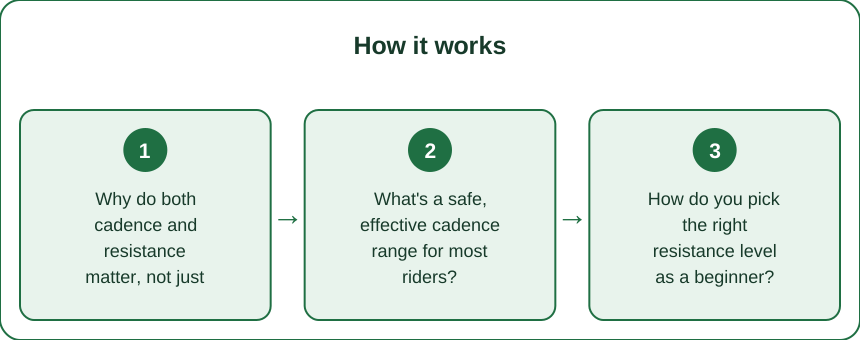
Why do both cadence and resistance matter, not just one?
Resistance without adequate cadence control (too low resistance combined with very high RPM) creates a fast, bouncy pedal stroke that increases strain on the knees without proportionally increasing effective effort.
Conversely, very high resistance at low cadence works the muscles hard but can strain the knees and lower back if form breaks down under the heavy push, especially for riders new to the specific mechanical demand of standing climbs.
What’s a safe, effective cadence range for most riders?
60-80 RPM for seated climbs and heavier resistance work, and 80-100 RPM for flatter, faster-paced segments is a commonly used range that balances cardiovascular benefit with joint safety for most riders.
RPM above 110-120 is generally reserved for short sprint intervals, not sustained riding, since sustained very-high cadence with low resistance mostly just spins the legs without building meaningful strength or cardio load.

How do you pick the right resistance level as a beginner?
A resistance level where you can maintain your target cadence for the full interval without bouncing in the saddle is the practical test — if you’re bouncing, resistance is too low for your cadence, or cadence is too high for your resistance.
A simple check: during a seated climb, you should be able to keep a conversation-pace breath at moderate resistance — gasping immediately usually signals resistance is too high for a sustainable pace, not necessarily ‘more intense = more effective.‘
Get the Most from Spin: Practical Adjustments That Help
Adjusting resistance gradually within a song (small turns, not big jumps) keeps cadence more stable and avoids the jarring effort spikes that come from large resistance changes.
Standing climbs specifically need higher resistance than seated riding at the same cadence, since standing removes the seat’s support and changes how force transfers to the pedals — riders who don’t increase resistance when standing often end up with an unstable, bouncy stroke.
FAQ: Spin Cadence and Resistance, Answered
Is higher cadence always a harder workout?
No — cadence needs to be paired with resistance. Very high cadence with too little resistance isn’t necessarily more effective, just faster-feeling.
Should beginners focus more on resistance or cadence?
Cadence control first — learning to hold a steady, non-bouncy pedal stroke at moderate resistance builds the foundation resistance progression should be added onto.
Why does my instructor call out both numbers during class?
Because the combination determines both intensity and safety — resistance alone or cadence alone gives an incomplete picture of effort or risk.
TL;DR:
- Cadence and resistance work together — neither number alone tells the full story
- 60-80 RPM for climbs, 80-100 for flats is a safe range for most riders
- Bouncing in the saddle means cadence and resistance are mismatched
- Standing climbs need more resistance than seated riding at the same cadence
Next class, watch for bouncing in your own stroke — that’s the clearest sign to adjust resistance, not just push harder.
Keep Reading
This article is for general informational and styling purposes only. Fit, sizing, and product availability may vary.