Cadence vs Resistance: Spin Class Decoded
Quick Answer: Cadence is pedaling speed in RPM; resistance is the simulated hill. High cadence at moderate resistance builds cardiovascular capacity and leg speed. Heavy resistance at low cadence builds muscular strength and endurance. Power is their product — and bouncing in the saddle means your resistance is too low for your cadence.
Every spin class is a conversation between two dials: how fast your legs spin, and how hard the wheel fights back.
Understand what each one trains and you stop just surviving class. You start using it — deciding what you came for instead of following instructions at random.
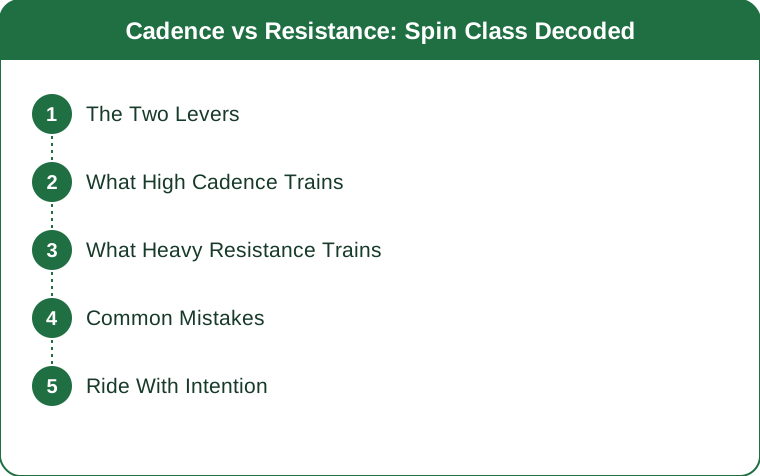
Here’s spin’s core physics, decoded.

What’s the Difference Between Cadence and Resistance?
Cadence is pedaling speed, measured in revolutions per minute (RPM). Typical spin ranges run from about 60 RPM on heavy climbs to 100+ RPM on flat sprints.
Resistance is the knob — the simulated hill, the friction or magnetic force the flywheel pushes back with.
Every drill in every class is just a different combination of the two. And power — the number that actually correlates with your results — is essentially their product. High cadence with no resistance produces very little power. Heavy resistance you can barely turn produces very little power. The useful work lives in the combinations.
That’s why “spin faster” isn’t automatically harder, and why the instructor keeps telling you to add a quarter turn.
What Does High Cadence Train?
Fast spinning at moderate resistance builds cardiovascular capacity and leg speed. Think 90–110 RPM with enough resistance that you’re driving the pedals rather than being pulled by the flywheel.
It’s the breathless, heart-pounding side of spin — the side that raises your aerobic ceiling and improves your body’s ability to move oxygen.
It also trains pedaling efficiency. Smooth high-cadence work teaches your legs to fire in sequence rather than stomping, and that carries over to any cycling you do outdoors.
If your goal is engine-building, live here often. Two of your three weekly classes is a reasonable split.

What Does Heavy Resistance Train?
Slow, loaded climbs — typically 60–75 RPM with substantial resistance — build muscular strength and endurance in the quads, glutes and hamstrings.
It should feel like pedaling through honey with purpose. Deliberate, controlled, and heavy enough that you can feel individual pedal strokes.
Strength on the bike transfers to power everywhere else in cycling: hills get easier, sprints get faster, and your ability to hold a hard effort for minutes rather than seconds improves.
The trade-off is that heart rate sits lower than it feels like it should. That’s normal. You’re training a different system.
What Are the Most Common Spin Mistakes?
Bouncing in the saddle. This is the single clearest signal that resistance is too low for your cadence. The flywheel is spinning faster than your legs are controlling it, and you’re being thrown rather than pedaling. Add resistance until you’re planted — always.
Grinding below 60 RPM. Very heavy resistance at very low cadence puts substantial strain through the knees, particularly the patellofemoral joint. If you can’t hold 60, take resistance off.
Faking the resistance. Nodding along to “add a full turn” and adding nothing cheats exactly one person. There’s no leaderboard on the honesty of your knob.
Locked elbows and death-gripping the bars. Weight belongs in the legs and core, not hanging off the shoulders. Soft elbows, light hands.
Ignoring bike setup. Saddle height wrong by two inches is the most common source of knee and hip complaints in spin. A knee bend of roughly 25–35 degrees at the bottom of the stroke is the standard target, and it’s worth asking an instructor to check it once.
How Should You Ride With Intention?
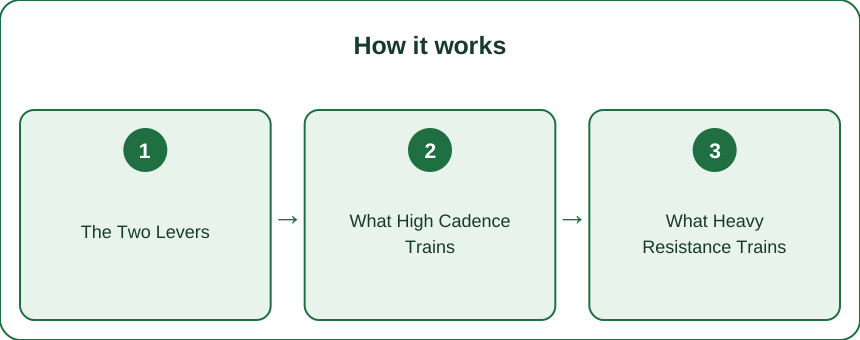
Decide before class: engine day or strength day.
Engine day — chase cadence, keep resistance honest but moderate, expect to be breathless. Strength day — honor the climbs, add the full turn, accept a lower heart rate for higher muscular effort.
Or follow the instructor’s blend and trust the design, which is a perfectly good option — most well-programmed classes deliberately alternate both within 45 minutes.
Knowing why you’re turning the knob transforms what you get out of it. The dial is yours; use it like you mean it.
A reasonable week for most people: two or three classes, with at least one day between hard sessions and some strength work outside the studio.
When Should You Check With a Professional?
See a doctor or physiotherapist for: knee pain during or after class (especially at the front of the knee), lower back pain that builds over a ride, numbness in the hands or the saddle area, or hip pain at the top of the pedal stroke.
Most of these are setup or load problems rather than injuries, and they’re fixable — but they don’t resolve by pushing through, and a single bike-fit assessment often solves what months of adjustment don’t.
Standard caveat: if you’re new to high-intensity exercise, have a cardiovascular condition, or are pregnant, get clearance before jumping into a class built around maximum-effort intervals.
Mini FAQ
What cadence should I aim for?
Broadly: 80–100 RPM for flat and endurance work, 60–75 RPM for climbs, and 100+ for short sprints. Individual comfort varies, so treat these as ranges rather than targets to chase at the expense of form.
Is spin enough exercise on its own?
For cardiovascular fitness, several classes a week gets you comfortably past the standard 150 minutes of moderate activity guideline. It won’t cover upper-body strength or bone-loading impact, so pair it with resistance training a couple of times a week.
Why is my heart rate lower on climbs than on flats?
Because you’re training muscular endurance rather than aerobic capacity. Heavy, slow work recruits more muscle fiber at a lower cardiovascular cost. It feels harder in your legs and easier in your lungs — and that’s exactly what it’s supposed to do.
TL;DR:
- Cadence = RPM; resistance = the hill. Power is their product.
- High cadence (90–110 RPM) at moderate resistance builds your engine and pedaling efficiency.
- Heavy resistance at 60–75 RPM builds leg strength and endurance.
- Bouncing means too little resistance; grinding under 60 RPM strains knees.
- Pick engine day or strength day before class, and get your saddle height checked once.
Spin mastery is two dials deep: spin fast to build your engine, load heavy to build your strength, and never bounce or grind. Turn the knob with intention and every class becomes exactly the workout you came for.
Keep Reading
This article is for general informational and styling purposes only. Fit, sizing, and product availability may vary.